August 19, 2026
How to Know If a Roofing Contractor Is Legitimate in North Texas
A legitimate roofing contractor can prove three things on the spot: a Texas business registration with a permanent local address, current general liability insurance verified straight from the carrier, and a written contract with no pressure to sign today. Anything less is a warning sign.
Key Takeaways
- Ask for a physical Texas address, not just a cell number or a P.O. box.
- Verify insurance by calling the carrier listed on the certificate yourself.
- The credentials that matter come from insurance carriers, manufacturers, and trade groups.
- A real estimate is written, itemized, and good for days, not minutes.
- Never pay for the full job up front or hand over an insurance check before work starts.
Every spring, storms roll through Farmersville, McKinney, and Wylie, and the knocking starts within hours. Some of those crews are excellent. Others will be three counties away by the time your first leak shows up. Knowing how to tell the difference protects your home and your insurance claim.
Start With the Basics: Is the Business Real and Local?
A legitimate company leaves a paper trail you can follow in ten minutes from your kitchen table.
- A physical street address in Texas that shows up on a map as a real building.
- A business name registered with the Texas Secretary of State.
- A profile on the Better Business Bureau with a history you can read.
- A website with real project photos, not stock images of roofs in other climates.
- A local phone number that a person answers during business hours.
If the only proof of the business is a magnetic door sign and a folding table full of brochures, keep asking questions.
Verify Insurance the Right Way
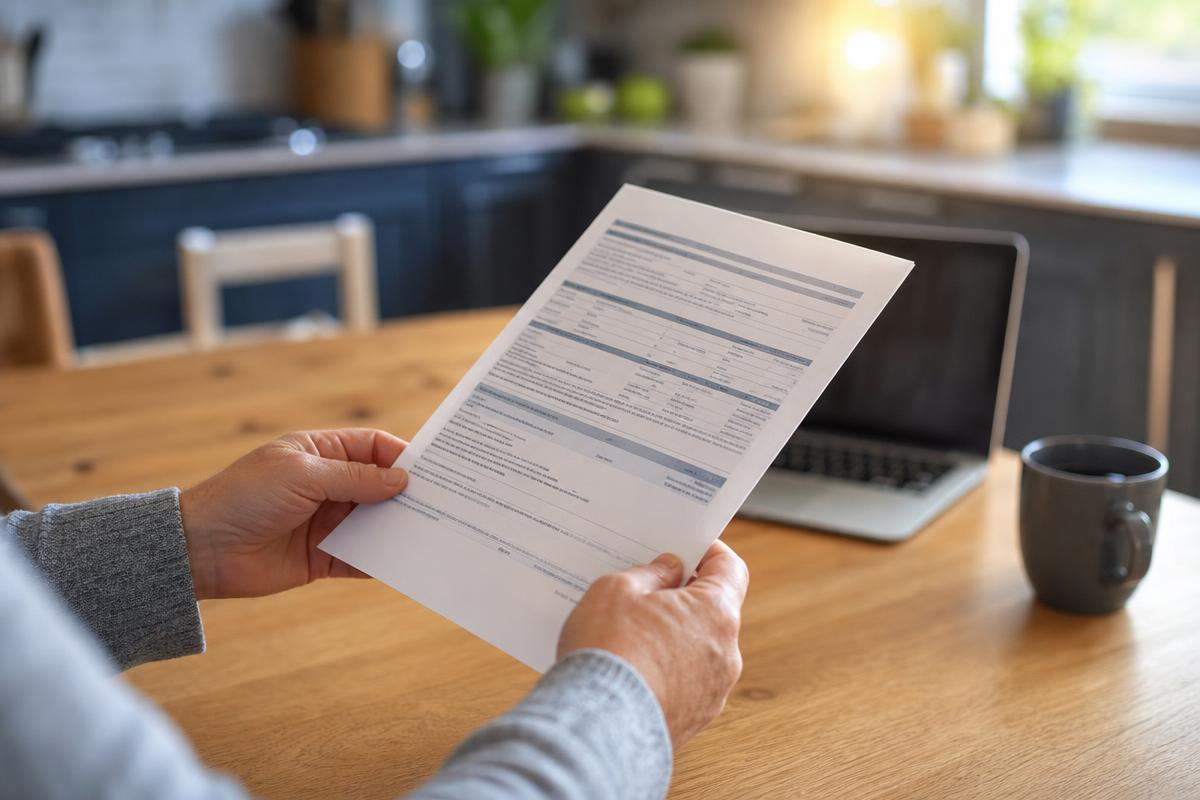
This is the single most important check, and most homeowners skip it. Ask for a certificate of insurance showing general liability and, if the company has employees, workers' compensation.
Then do the part that matters: call the insurance agent printed on that certificate and confirm the policy is active today. Certificates are easy to fake and easy to let lapse. A five minute phone call tells you the truth.
If a worker gets hurt on an uninsured crew, that claim can land on your homeowners policy. That is a risk no price discount is worth.
Look at Credentials, Coverage, and Track Record
Credentials in this trade are voluntary, so the ones a contractor chooses to earn tell you something:
| What to ask for | Why it matters |
|---|---|
| Manufacturer certification | Brands like CertainTeed and Malarkey train and vet the contractors they certify, and certified installers can offer stronger workmanship warranties. |
| Trade association membership | Groups such as the National Roofing Contractors Association hold members to installation standards. |
| Voluntary state registration | The Roofing Contractors Association of Texas runs a voluntary program that at least shows the company chose accountability. |
| Local permit history | City building departments can confirm a contractor pulls permits in your area. |
Manufacturer certification also matters for your warranty. A shingle warranty can be reduced or voided when the roof is installed outside the manufacturer's spec.
Want a ballpark number before you talk to anyone? Run your own numbers with our roof cost calculator, then compare the bids you receive.
Read the Estimate Like a Contract, Because It Is One
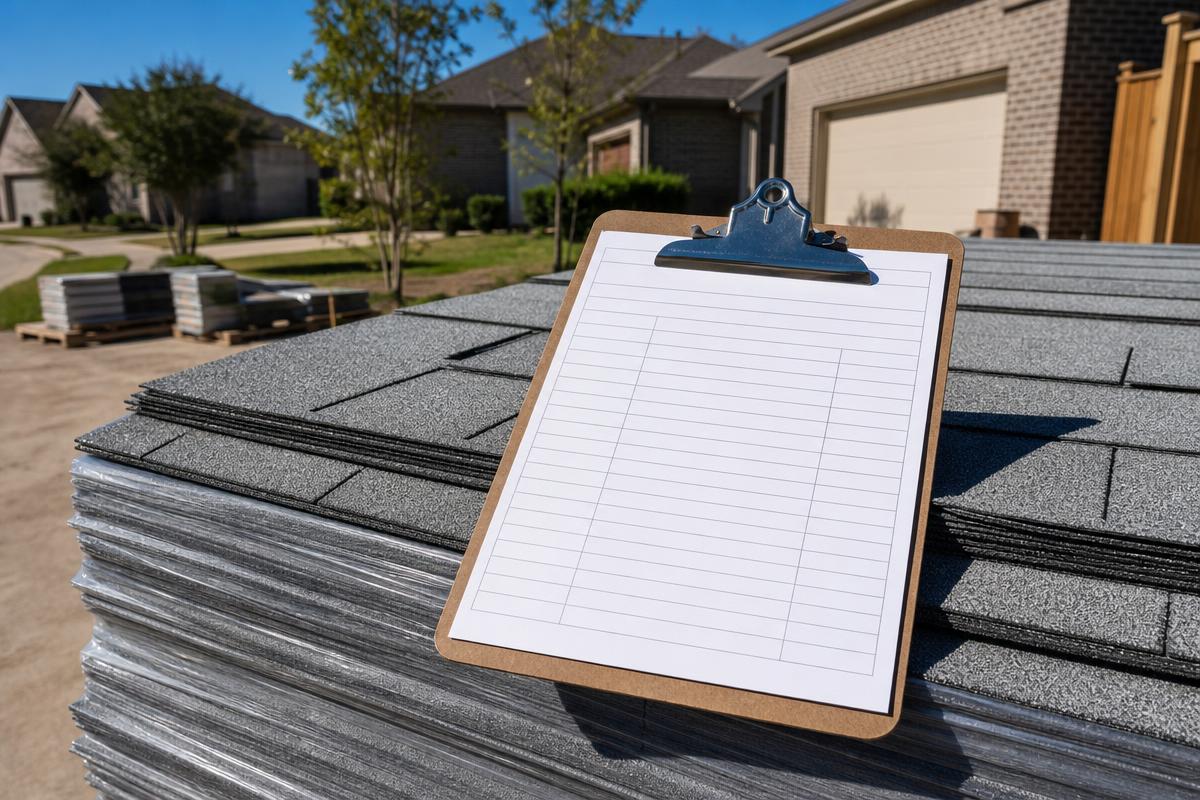
A legitimate estimate is written, itemized, and specific. Look for the shingle brand and product line, underlayment type, drip edge, ventilation, flashing, decking replacement pricing per sheet, cleanup, and warranty terms in plain language.
Watch for these gaps:
- A single lump sum with no line items.
- No mention of who pulls the permit.
- No start window or completion window.
- Payment terms that ask for most of the money before materials arrive.
- Verbal promises about your deductible or your insurance claim that never appear in writing.
That last one deserves its own warning. In Texas it is illegal for a contractor to waive, absorb, or rebate your insurance deductible. A contractor who offers to make your deductible disappear is telling you exactly how they handle rules.
Red Flags That Should End the Conversation
- Pressure to sign immediately or an offer that expires the same day.
- Full payment or a large deposit demanded up front.
- No written contract, or a contract you are asked to sign without reading.
- Out of state plates with no local office and no local references.
- An offer to inspect your roof and then a sudden claim of severe damage with no photos.
- Asking you to sign an authorization form that quietly assigns your insurance benefits.
Storm season brings a particular version of this. Our guide on how to spot storm chaser roofers walks through the pitch these crews use and how to shut it down politely.
Check Reviews, Then Check the Roofs
Reviews are useful when you read them for patterns instead of star counts. Look for photos from real North Texas homes, mentions of city names you recognize, and how the company responded to complaints.
Then ask for three addresses of roofs the crew installed in the last year within twenty miles. A legitimate local contractor will have them nearby. Drive by, look at the ridge lines, the valleys, and the flashing details around chimneys.
Insurance Claims Deserve Extra Caution
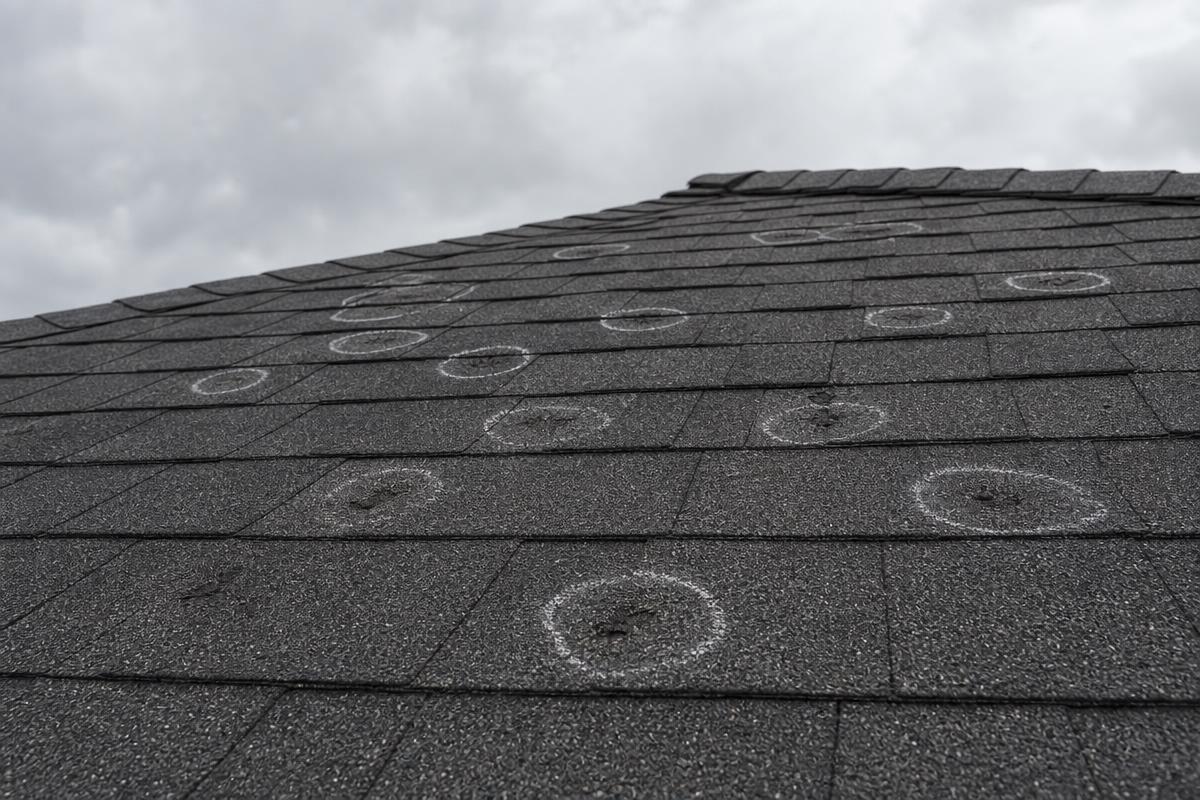
Hail claims attract the least honest operators in this trade. Your contractor should document damage with dated photos, meet your adjuster on site, and write an estimate that matches the scope of the loss.
Your contractor should never file the claim for you, sign paperwork on your behalf, or promise a specific settlement amount. The Texas Department of Insurance publishes clear guidance on the claim process and on contractor fraud. If you are working through a hail claim now, our overview of roof insurance claims in North Texas explains how the steps fit together.
A Simple Five Minute Vetting Script
Ask these questions before anyone gets on your roof:
- What is your physical business address here in Texas?
- Who is your general liability carrier, and may I have the agent's phone number?
- Are the crews employees or subcontractors, and who carries their coverage?
- Which manufacturer are you certified with, and what workmanship warranty comes with the job?
- Will you pull the permit and meet the city inspector?
- Can I have this estimate in writing with no obligation to sign today?
Honest contractors answer all six without hesitating. In our experience, the answers should be boring. Boring means the company has nothing to dance around.
Frequently Asked Questions
How do I verify a roofing contractor in Texas?
Ask for a certificate of insurance and confirm it directly with the carrier, check that the business has a permanent local address, look up permit history with your city, and ask for recent local references.
How much should I pay a roofer up front?
Most legitimate contractors ask for little or nothing before materials are delivered, then bill progress payments. Full payment before work starts is a red flag.
Is a door to door roofer always a scam?
Not always. Reputable local companies do canvass after storms. The difference is that a legitimate one will give you time, put everything in writing, and pass every verification check above.
What if a contractor offers to cover my deductible?
Walk away. Texas law prohibits contractors from waiving or absorbing your insurance deductible, and the offer usually means the cost is being hidden somewhere else in the job.
How do I check a roofer's insurance?
Ask for the certificate of insurance, then call the agent or carrier listed on it and confirm the policy is active. Do not rely on the paper copy alone.
Talk to a Local Roofer Who Passes Every Check
Flying Cow Roofing is a family owned company based right here in Farmersville, TX, serving homeowners across North Dallas. We will show you our insurance, our certifications, and a written itemized estimate before you commit to anything.
Schedule a free, no pressure roof inspection or call us at (469) 902-0727. We will tell you what your roof actually needs, even when the answer is nothing yet.