
September 14, 2026
How Do You Repair a Leaking Roof? A North Dallas Guide
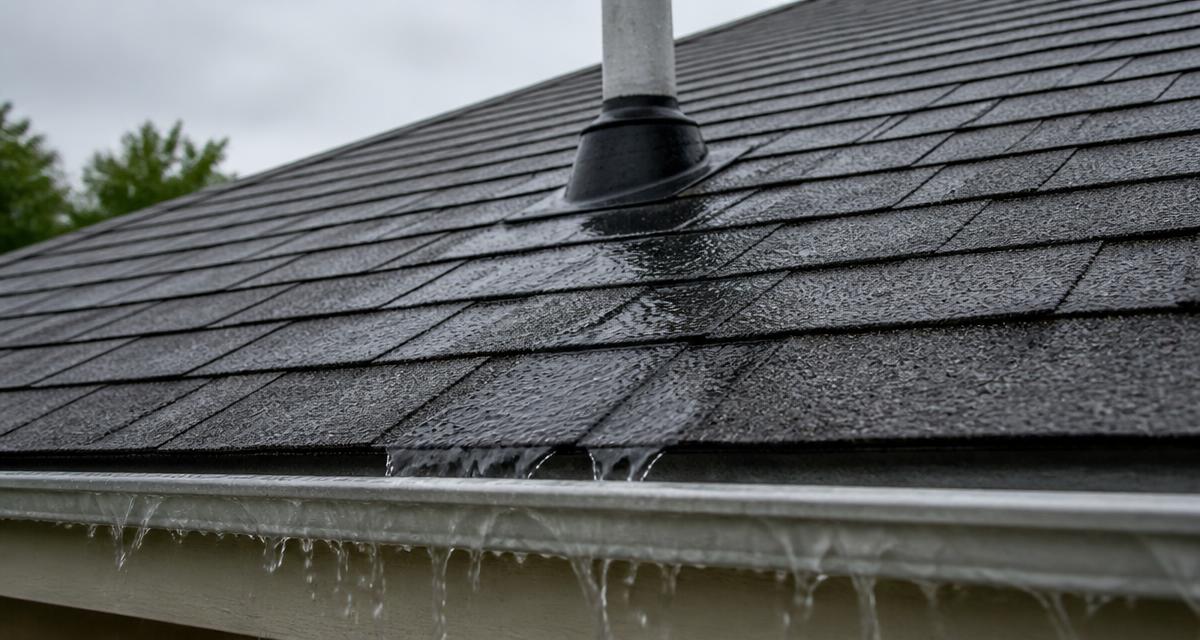
To repair a leaking roof you have to do three things in order: stop the water getting into the house, find where the water is actually entering the roof, and then repair that specific failure point. Most residential leaks in North Dallas are not holes in the field of the shingles. They are failures at flashing, at penetrations, or at nails that have backed out.
Key Takeaways
- Protect the inside first. A tarp, a bucket and a relieved ceiling bulge cost nothing and prevent thousands in interior damage.
- Water travels. The wet spot on your ceiling is almost never directly below the entry point.
- Around three quarters of the leaks we open up start at a flashing, a pipe boot, or a valley, not at a shingle.
- A cracked pipe boot is a small, same day repair. A leak caused by an aged out roof is not worth patching.
Step 1: Stop the damage inside the house
Before anyone climbs a ladder, take the pressure off the ceiling. If the drywall is sagging or bulging, there is standing water above it. Put a bucket underneath and pierce the low point of the bulge with a screwdriver so the water drains in a controlled stream. A drywall patch is cheap. A collapsed ceiling is not.
Move furniture, lift rugs, and photograph everything as you go. Those photos matter later if the damage becomes an insurance matter.
Step 2: Trace the leak to its real source
Water enters the roof, runs down the underside of the decking or along a rafter, and drops at the first low point it reaches. In a typical Plano or McKinney two story home, the entry point can sit six to ten feet uphill from the stain you see.
From inside the attic, with a flashlight, look for:
- Daylight showing through the decking.
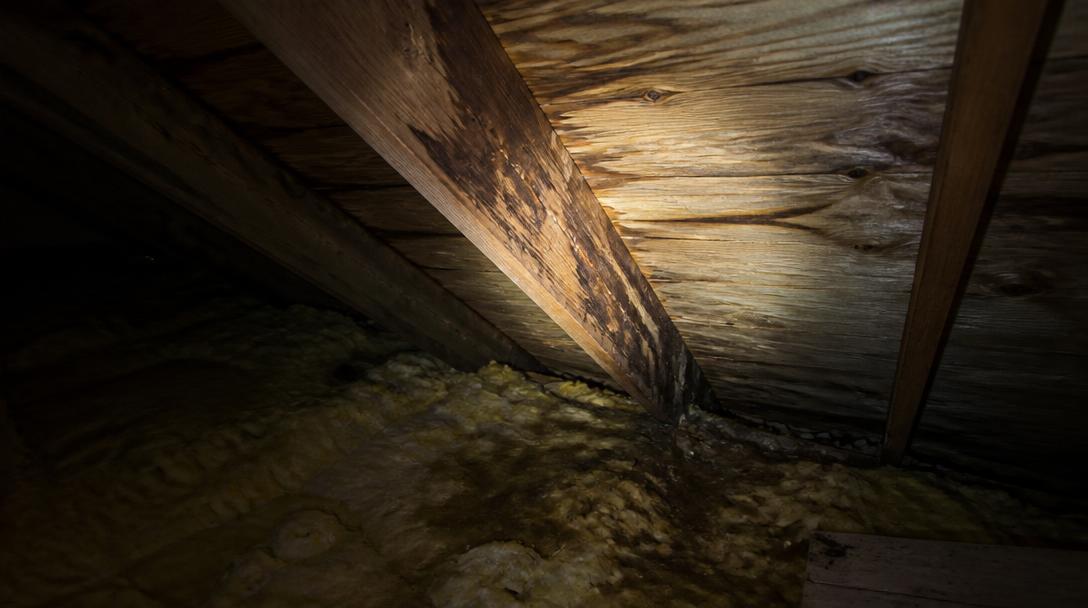
- Dark staining or streaking running down a rafter, which shows you the travel path.
- Rusted nail shanks poking through the decking, a sign of condensation rather than a true leak.
- Compressed or damp insulation, which usually sits directly under the entry point.
Follow the stain upward to its highest point. That is where the water is coming in.
Step 3: Know what usually fails
These are the failure points we find most often on North Dallas homes.
| Source | What it looks like | Typical fix |
|---|---|---|
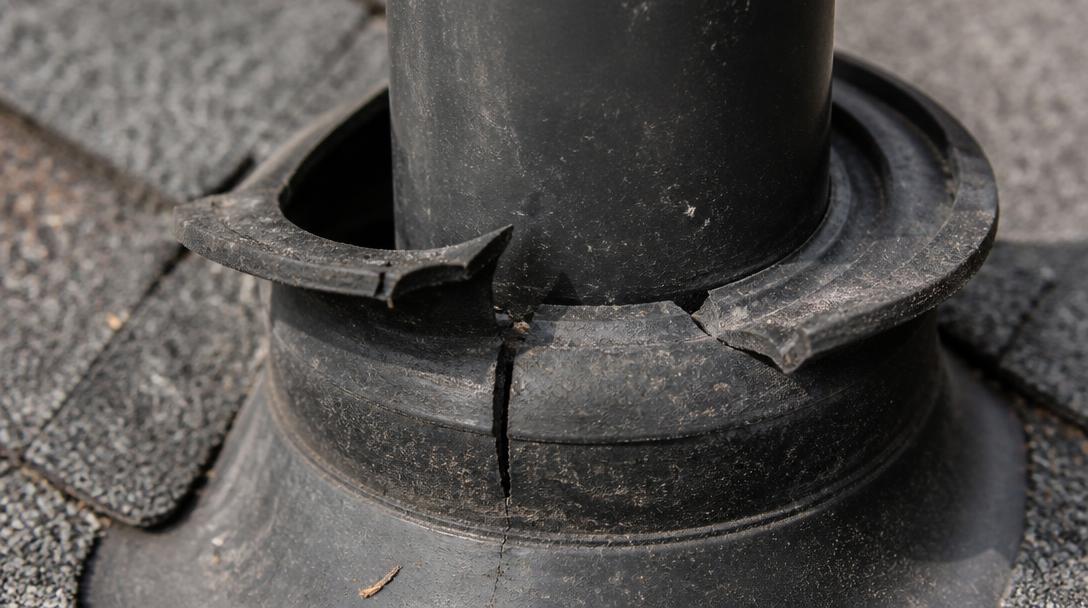
| Pipe boot | Rubber collar around a plumbing vent, split and curled from UV | Replace the boot |
| Step flashing | Where the roof meets a wall or chimney, metal lifted or rusted | Reset or replace the flashing |
| Valley | Two roof planes meeting, debris packed and shingles worn | Clear and reline the valley |
| Exposed fasteners | Nail heads backed out and no longer sealed | Reseal or replace shingles |
| Hail bruising | Soft dark circles, granules missing | Assess the whole roof, not one spot |
| Ice or wind driven rain | Water pushed up under the shingle edge | Improve underlayment and edge detail |
Pipe boots are the single most common culprit. The rubber typically lasts ten to fifteen years in Texas sun, which is shorter than the shingles around it, so a fifteen year old roof very often leaks at the boots long before the shingles give up.
Step 4: Make a safe temporary repair
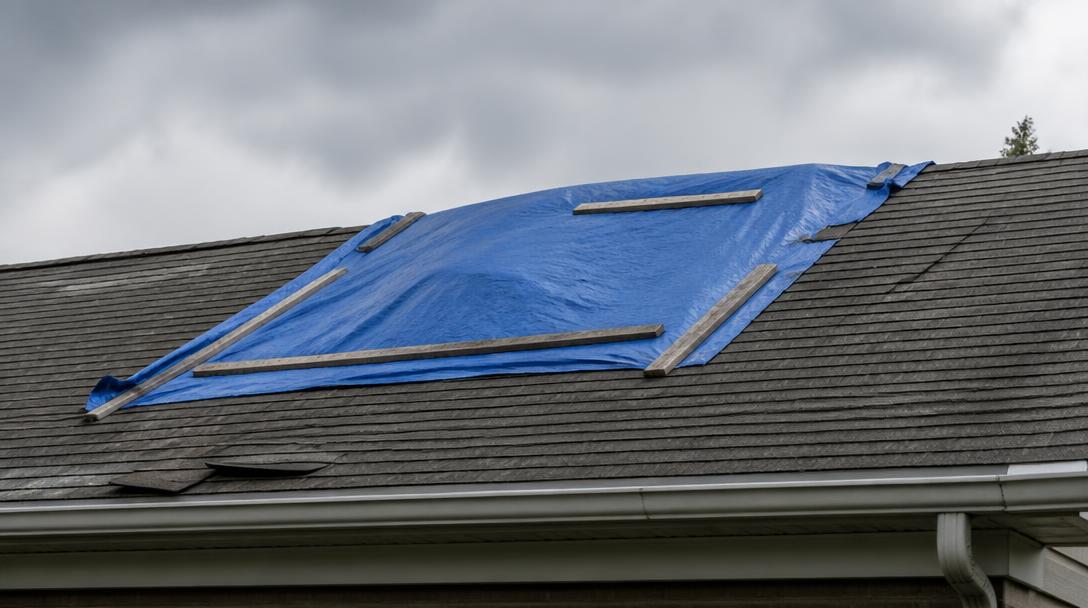
If rain is still coming and a roofer cannot get out the same day, a tarp is the correct answer. Run it from above the leak area over the ridge, so water cannot run under the upper edge, and secure it with boards rather than loose nails through the middle of the field. Roofing cement smeared over a suspected crack is a last resort. It hides the evidence a roofer needs and it usually fails within a season.
Do not go up on a wet roof. A composition roof in the rain is genuinely dangerous, and a fall costs far more than a service call.
Step 5: The permanent repair
A proper repair means the failed component is removed and replaced, not covered. For a pipe boot that means lifting the courses above it, sliding the old boot out, installing a new one, and re-bedding the shingles. For flashing it means opening the wall detail and setting new metal in the correct overlap order. Sealant alone is a patch, not a repair.
Typical North Dallas repair costs
| Repair | Usual range |
|---|---|
| Pipe boot replacement | 250 to 500 dollars |
| Small flashing repair | 350 to 750 dollars |
| Valley repair | 600 to 1,500 dollars |
| Section of shingles replaced | 500 to 1,800 dollars |
| Decking replaced under the leak | Add 75 to 150 dollars per sheet |
Ranges reflect what homeowners in our service area commonly pay. Your roof pitch, height, and the extent of hidden damage move the number.
When repair is the wrong answer
Repair stops making sense when the roof itself is the problem. Call it a replacement conversation when:
- The roof is past twenty years old and leaks in more than one place.
- Shingles are curling, cracking, or shedding granules across the whole slope.
- Hail has bruised the field broadly, not just at one spot.
- You have already paid for two or more repairs in two years.
Patching an aged out roof is money spent on borrowed time. Our guide on new roof versus repairs walks through where the line sits.
If the leak came from a storm
North Dallas gets hail. If the leak started after a storm, document it before anything is repaired: dated photos, the storm date, and a written inspection report. Insurance outcomes depend on your policy, your carrier, and their adjuster, and no roofer can promise how a claim will be decided. We can document what we find and explain it clearly, and the decision stays with your carrier.
Frequently Asked Questions
Can I repair a roof leak myself?
You can tarp it and relieve a bulging ceiling safely from inside. Going onto the roof to reseal or replace components is where most homeowners get hurt or make the leak worse, especially on steep or two story North Dallas homes.
How much does it cost to fix a roof leak?
Most single point residential leak repairs land between 250 and 1,500 dollars, depending on what failed and whether the decking underneath is wet. A boot is at the low end, a valley or wall flashing at the high end.
How long can a roof leak go unrepaired?
Not long. Wet decking loses strength within weeks and mold can start in a couple of days in Texas humidity. A leak that looks minor in April is usually a decking and insulation bill by June.
Why does my roof only leak in heavy rain?
That points to wind driven water or a marginal detail rather than an open hole. Water is being pushed under an edge or flashing that copes with ordinary rain. It still needs fixing, because the detail will keep degrading.
Does a roof leak mean I need a whole new roof?
Not by itself. One leak on a ten year old roof is a repair. Multiple leaks on a twenty year old roof means the roof has reached the end of its service life.
Get the leak looked at
Flying Cow Roofing is a family run residential roofer based in Farmersville, serving Plano, Frisco, McKinney, Allen and the surrounding North Dallas area. If you have an active leak, call (469) 902-0727 or book a free roof inspection and we will find where the water is actually getting in before anyone quotes you anything.