September 3, 2026
Red Flags When Hiring a Roofing Contractor in North Texas
Identifying red flags when hiring a roofing contractor requires looking for poor communication, a lack of verifiable insurance, demands for large upfront payments, and an inability to provide a detailed, written scope of work. By spotting these warning signs early, North Texas homeowners can avoid costly scams and subpar workmanship that leads to premature roof failure.
Key Takeaways
- Verify Professionalism: Avoid contractors who lack a local physical address or valid general liability insurance.
- Financial Safety: Never pay the full project amount upfront or provide cash payments without a receipt.
- Document Everything: Ensure every promise, from material types to warranty lengths, is included in a written contract.
- Local Expertise: Choose contractors familiar with North Texas weather patterns and building requirements.
The Importance of Vetting Your Roofing Contractor
Hiring a roofer in the North Dallas Metroplex is a significant investment that protects your most valuable asset. The high frequency of severe weather in North Texas often attracts "storm chasers" who travel from state to state following hail maps. According to the Better Business Bureau's guidance on hiring contractors, homeowners should prioritize local, established businesses over door-knockers who appear only after a storm.
Protecting Your Property Value
A poorly installed roof can lead to leaks, mold growth, and structural damage that decreases your home’s resale value. Flying Cow Roofing recommends that homeowners check a contractor's reputation through local references rather than relying solely on online reviews. Taking the time to vet a company ensures that the materials used are compatible with the intense heat and wind common in Farmersville and surrounding areas.
Avoiding Legal and Financial Liability
When you hire an uninsured or fly-by-night contractor, you take on significant personal risk. If a worker is injured on your property or if the contractor damages a neighbor's home, you could be held liable. Proper vetting involves confirming the company is a registered legal entity and operates with the necessary protections for both the worker and the homeowner.
If you are concerned about your roof's current condition after a North Dallas storm, you can schedule a free roof inspection with our team to get a professional assessment of your property.
Red Flags During the Initial Consultation
The first meeting with a contractor sets the tone for the entire project. If a representative is dismissive of your questions or arrives late without calling, it often mirrors how they will handle the actual construction. Professionalism starts with the very first interaction and extends to how they present their business credentials and technical knowledge.
Communication Barriers and Pressure Tactics
Beware of contractors who use high-pressure sales tactics to force a "same-day" signature. A legitimate company understands that a roof replacement is a major decision and will give you time to review the estimate. If they become aggressive or defensive when you ask for clarification, it is a clear sign to look elsewhere.
Checklist: Consultation Red Flags
- Unprofessional Appearance: No branded vehicle, uniform, or identification.
- Vague Answers: Inability to explain specific material benefits or installation steps.
- Door-to-Door Pressure: Insisting you must sign immediately to get a "special" storm discount.
- Lack of Local Knowledge: Unfamiliarity with North Texas weather challenges or local neighborhoods.
The Problem with Storm Chasers
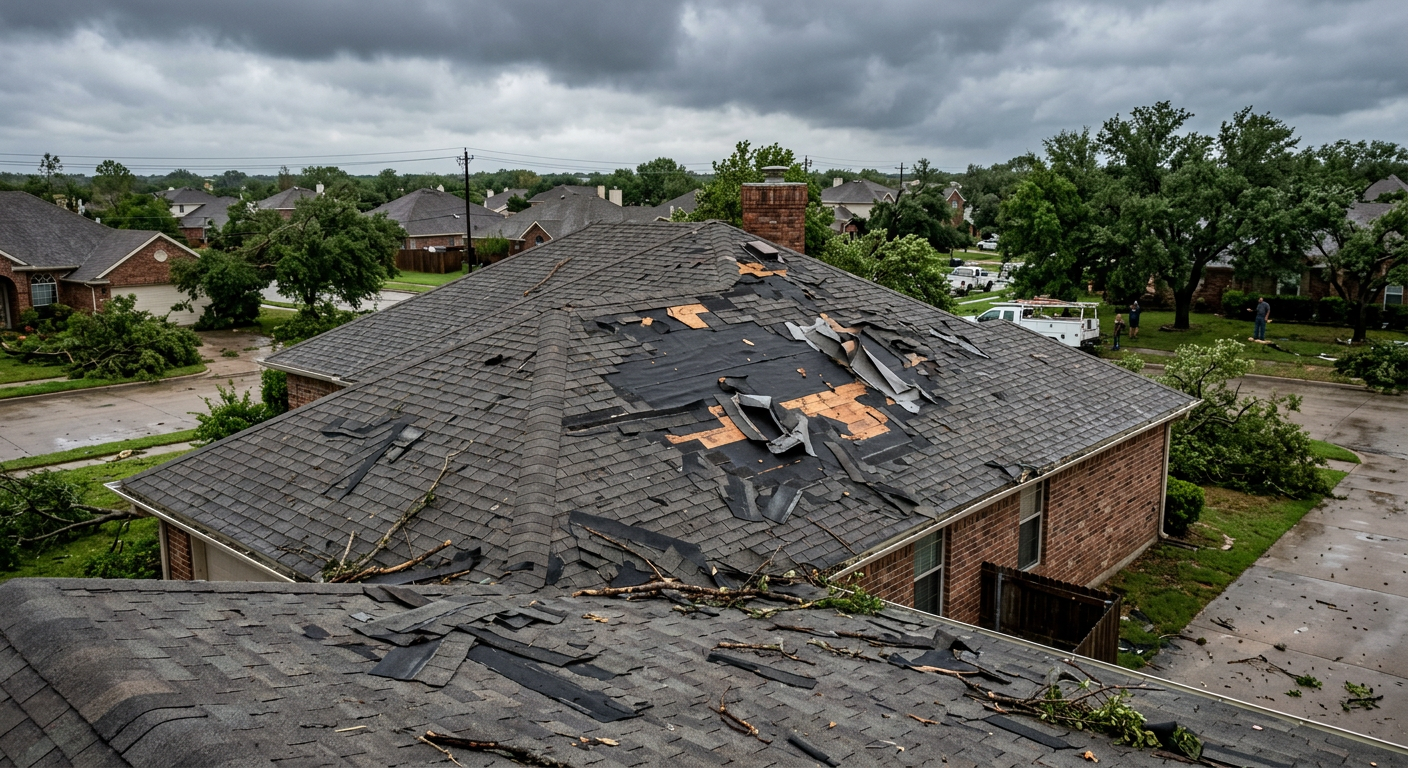
Storm chasers are individuals or crews that move into an area immediately following a declared weather event. They often offer "free roofs" or claim they can waive your deductible, which is a violation of Texas law. According to the Texas Department of Insurance, it is illegal for a contractor to offer to waive or "absorb" a homeowner's insurance deductible.
Financial Warning Signs and Payment Issues
How a contractor handles money is often the most telling sign of their business health. A company that is financially stable will not need your deposit to buy materials for your specific job. While a small commencement deposit is standard in some cases, demanding 50% or more before any materials arrive at your home is a major red flag.
Demands for Cash or Full Upfront Payment
Cash payments are difficult to track and offer no protection if the contractor disappears. Always use a traceable payment method like a check or credit card. If a contractor insists on cash, it may be an attempt to avoid taxes or hide the transaction from their insurance carrier.
| Payment Red Flag | Why It Is Dangerous |
|---|---|
| Total Upfront Payment | The contractor has no incentive to finish the job. |
| Cash-Only Requests | No paper trail for warranties or legal disputes. |
| Checks to Individuals | Business funds should go to a company account. |
| Deductible Waiving | This is insurance fraud under Texas law. |
Inconsistent or Unrealistic Pricing
If one estimate is significantly lower than three others, it is rarely a "good deal." Usually, an extremely low price means the contractor is cutting corners on materials, skipping necessary permits, or using uninsured labor. Flying Cow Roofing notes that quality materials like Malarkey Vista shingles have a baseline market cost that all reputable North Dallas contractors must meet.
Documentation and Insurance Red Flags
A handshake deal is never sufficient for a roofing project. You need a paper trail that protects you from the moment the first shingle is removed until the final cleanup is complete. If a contractor hesitates to provide written proof of their insurance or their business address, they are likely not operating a legitimate business.
Missing Insurance Verification
Every contractor should carry general liability insurance to cover property damage. You should ask to see a certificate of insurance (COI) and verify it directly with the agent listed on the document. A common tactic for illegitimate contractors is to show an expired policy or one that has been canceled for non-payment.
Lack of a Physical Local Address
In the digital age, a website is not enough to prove a company exists. A physical office or yard in the North Texas area, such as Farmersville or McKinney, shows the company is invested in the community. If their "office" is a P.O. Box or a temporary hotel room, you will have no way to find them if your roof starts leaking six months later.
Contractual Omissions
A professional contract should be exhaustive. If a contractor provides a one-page "estimate" that lacks detail, it leaves you vulnerable to "hidden costs" once the project begins. Ensure the contract includes the exact brand of shingles, the type of underlayment, and the specific ventilation products being used. You can learn more about the components of a quality system in our guide to the roof replacement process.
Warning Signs in the Scope of Work
The "scope of work" is a technical document that outlines exactly what will happen on your roof. If this document is vague, the contractor may be planning to reuse old materials, such as rusted flashing or damaged drip edge, to save on costs. A detailed scope is the only way to ensure you are getting the "new roof" you are paying for.
Reusing Old Materials
A common red flag is a contractor who says, "your flashing looks fine, we'll just leave it." In the heat of North Texas, metal flashing and rubber pipe boots degrade over time. A quality installation requires replacing these components to ensure the system reaches its full life expectancy.
Essential Scope Items
- Drip Edge: Must be installed along all eaves and rakes to prevent water from wicking into the fascia.
Ice and Water Shield: Critical in Valleys
-
Ice and Water Shield: Critical in valleys and around penetrations to prevent leaks from wind-driven rain.
-
Underlayment Type: Specification of synthetic underlayment versus old-fashioned felt paper.
-
Ventilation: A plan for intake and exhaust to prevent heat buildup in the attic.
Clean Up: A specific promise to use magnetic sweeps to collect nails from your lawn and driveway.
Ignoring Ventilation Requirements
Texas attics can reach temperatures exceeding 150 degrees in the summer. If a contractor does not mention ventilation or perform a calculation for your attic square footage, your new shingles could literally "cook" from the inside out. Refer to the Department of Energy's attic ventilation guidelines for why balanced airflow is necessary for shingle longevity and energy efficiency.
Technical Red Flags and Installation Shortcuts
Even if the contractor seems nice, their technical methods might be flawed. Some contractors try to save time by "overlaying" new shingles over old ones (a roof-over). This is a significant red flag in North Texas because it hides deck rot and adds excessive weight to the structure, which may violate local building codes.
Lack of Manufacturer Knowledge
A contractor should be able to explain the specific installation requirements for the products they sell. For example, CertainTeed’s Belmont specifications require specific nailing patterns to maintain wind warranties. If a contractor says "nails are nails," they are ignoring the engineered standards that keep your roof attached during a North Dallas windstorm.
The Absence of a Workmanship Warranty
A manufacturer warranty only covers material defects, which are rare. Most roof failures are caused by installation errors. If a contractor does not offer a written lifetime workmanship warranty, they are not standing behind their crew's labor. Always ask for this in writing before any work commences on your Farmersville home.
Frequently Asked Questions
How can I tell if a roofing contractor is local?
Check for a physical business address in the North Dallas area and verify how long they have been operating under their current name. Ask for references from local neighborhoods and look for local area codes on their vehicles and marketing materials.
Is it a red flag if a roofer asks to see my insurance summary?
It is common for contractors to review the insurance scope to ensure the estimate covers all necessary components, but it is a red flag if they ask for the "Adjuster’s Worksheet" before providing their own independent estimate. They should calculate the cost of the roof based on the work required, not the amount the insurance company initially offered.
What should I do if a contractor offers to pay my deductible?
Politely decline and find another contractor. In Texas, it is illegal for a contractor to pay, waive, or rebated a deductible. This is considered insurance fraud, and both the contractor and the homeowner could face legal consequences.
Why is a low bid sometimes considered a red flag?
An unusually low bid often indicates that the contractor is missing insurance, using lower-quality materials, or planning to add "change orders" later to increase the price. A legitimate estimate reflects the true cost of skilled labor and high-quality materials required for North Texas weather.
Should a contractor provide a written cleanup plan?
Yes. A major red flag is a contractor who does not mention how they will protect your landscaping or how they will remove thousands of old nails from your property. A professional team uses tarps to protect plants and magnetic rollers to ensure your driveway is safe for vehicles.
For a reliable assessment of your roof from a family-owned team that prioritizes transparency and quality, please contact us today to schedule your free inspection.
A note on insurance: This article is educational. Flying Cow Roofing does not file, negotiate, or adjust insurance claims for homeowners. Your carrier and your policy decide what is covered, and a licensed public adjuster can represent you if you want help with the claim itself. We inspect the roof, document what we find, and give you a written estimate you can share with anyone.