
October 21, 2026
15 Year Old Roof Value: What It Is Worth to Insurers, Buyers, and You
Written by Wayne Bangs, Owner, Flying Cow Roofing
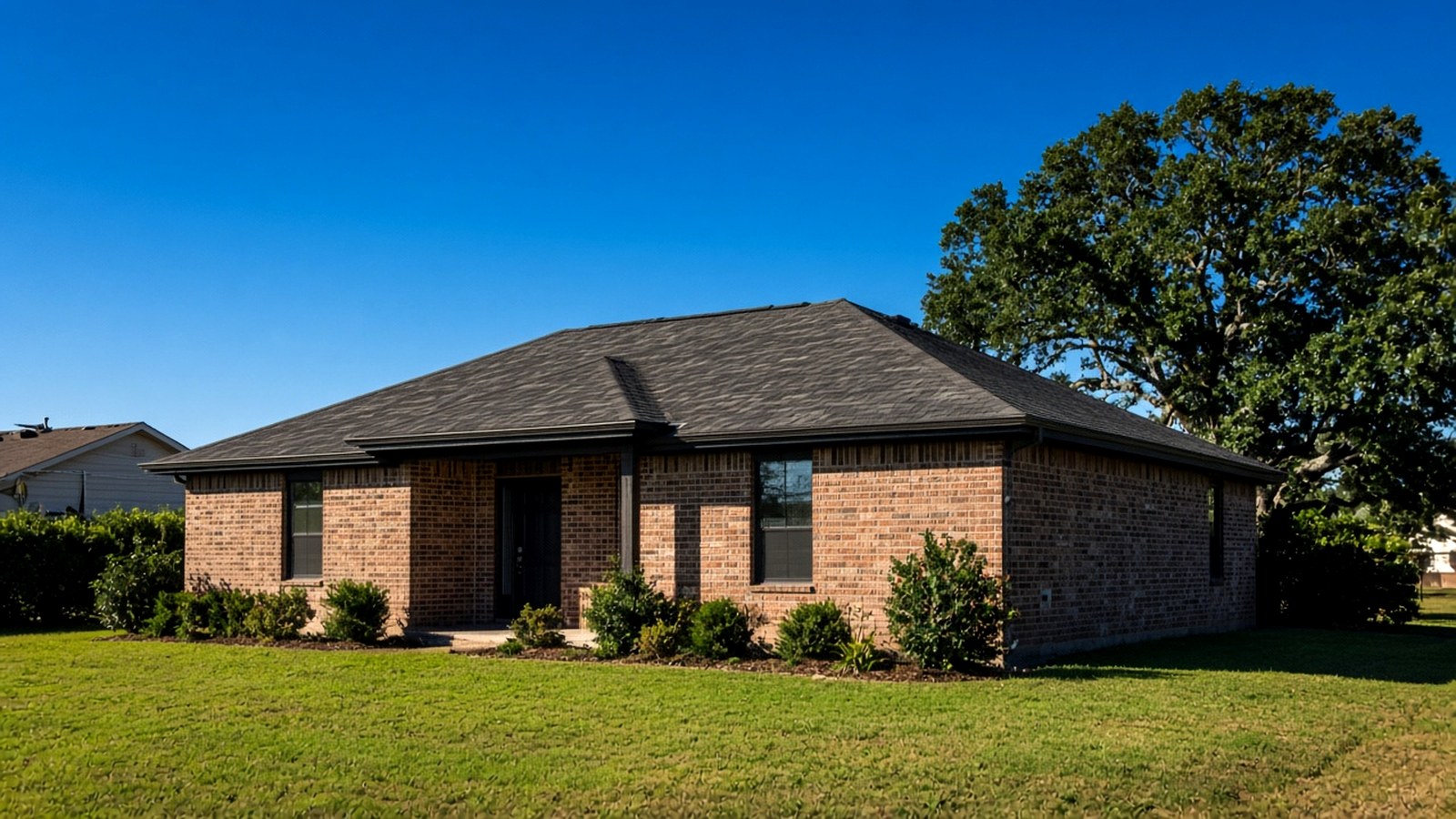
15 year old roof value depends on condition, material, and your insurance policy. In North Texas an architectural shingle roof typically lasts 18 to 22 years, so at 15 it is in its last stretch. Actual cash value policies pay a depreciated share, and buyers often price in a replacement.
That value is what the roof is still worth to the people who pay for it: you, the insurer that settles a hail or wind claim, and the buyer and lender in a home sale. Condition and policy wording matter far more than the number of years alone.
Key Takeaways
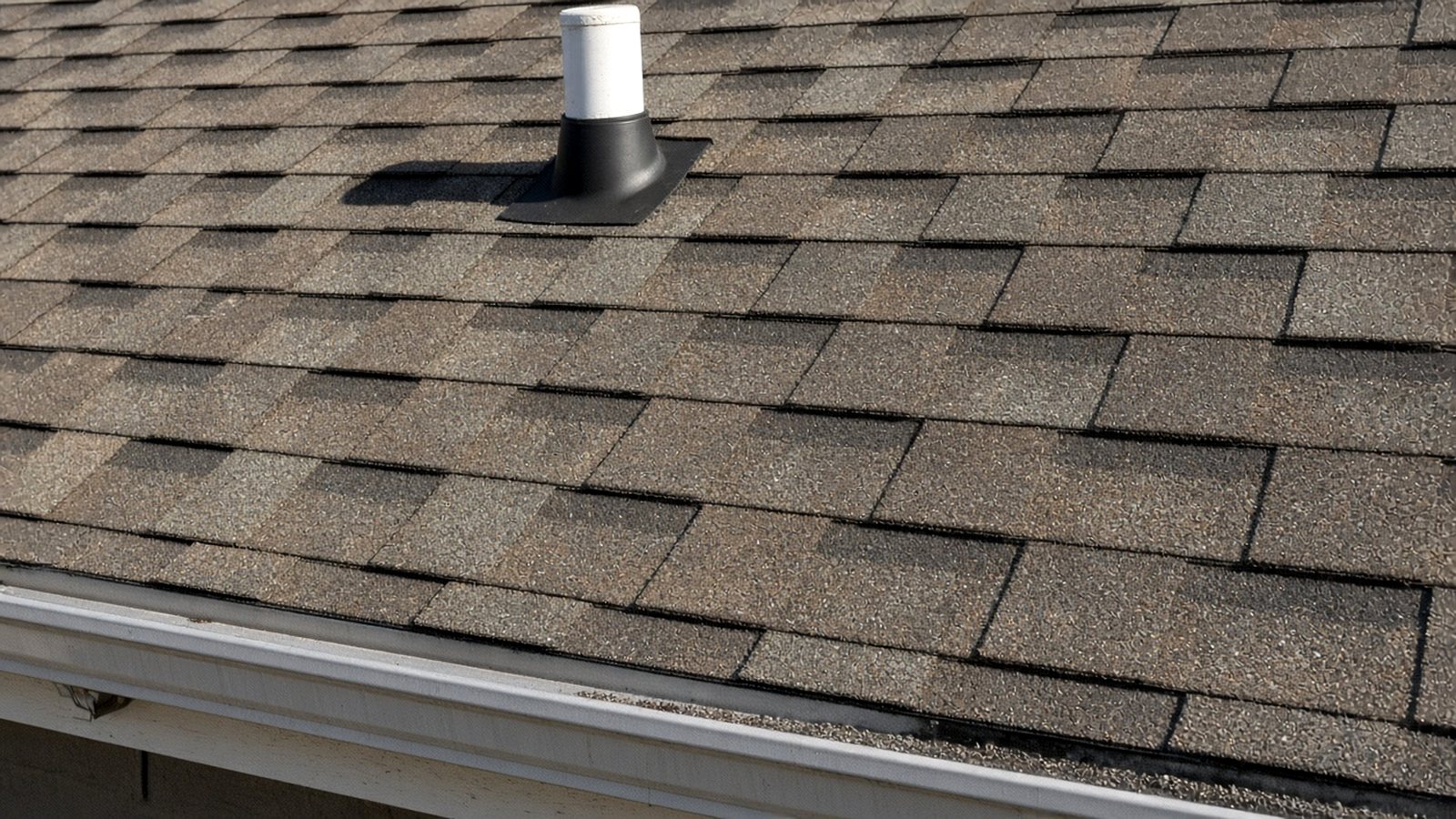
- Age is a starting point, not a verdict: InterNACHI's national chart puts architectural asphalt at about 30 years, but in our heat and hail, Flying Cow Roofing typically sees 18 to 22 years.
- Your policy type matters most: The Texas Department of Insurance explains that replacement cost coverage pays today's price regardless of roof age, while actual cash value coverage subtracts depreciation.
- Sellers must disclose roof age: The Texas seller's disclosure form asks for the roof type and its approximate age.
- Replacing before a sale rarely pays back in full: The 2025 Cost vs Value Report estimates a Dallas asphalt roof replacement recoups about 56.9% of its cost at resale.
- A documented inspection is the real value check: Photos of granule loss, hail bruising, flashing, and decking tell you more than the install date does.
Is a 15-Year-Old Roof Old in North Texas?
So, is a 15 year old roof old? For most homes in Collin County, yes: an asphalt roof at 15 is in the back half of its life. How far into that back half depends on the shingle, the attic, and the storms it has already taken.
National Charts vs. Local Reality
InterNACHI's Standard Estimated Life Expectancy Chart lists architectural asphalt shingles at 30 years and 3-tab shingles at 20 years. InterNACHI notes that those figures assume normal wear and regular maintenance, and that "hot climates drastically reduce asphalt shingle life." Our North Texas roof lifespan guide lists the ranges we actually see on local roofs:
- 3-tab asphalt (12–15 years): at 15, it is at or past the end of its life.
- Architectural asphalt (18–22 years): at 15, it is in its last few years.
- Impact-resistant asphalt (20–25 years): at 15, it is in its middle to late stage.
- Metal or stone-coated steel (40–50 years): at 15, it is early to mid life.
Not sure where your roof falls in that range? A free roof inspection gives you a dated photo report of its actual condition.
What Decides How Much Life Is Left
Two 15-year-old roofs on the same street can be worth very different amounts. These are the factors an inspector checks:
- Granule loss: Bare spots and grit in the gutters mean the asphalt is losing its UV protection.
- Hail bruising: Impacts can fracture the shingle mat under the granules without an obvious hole.
- Attic ventilation: Poor intake and exhaust let heat bake shingles from below.
- Flashing and pipe boots: Penetrations often fail before the shingles do.
- Decking condition: Soft or stained decking in the attic points to long-running leaks.
How Insurers Value a 15-Year-Old Roof
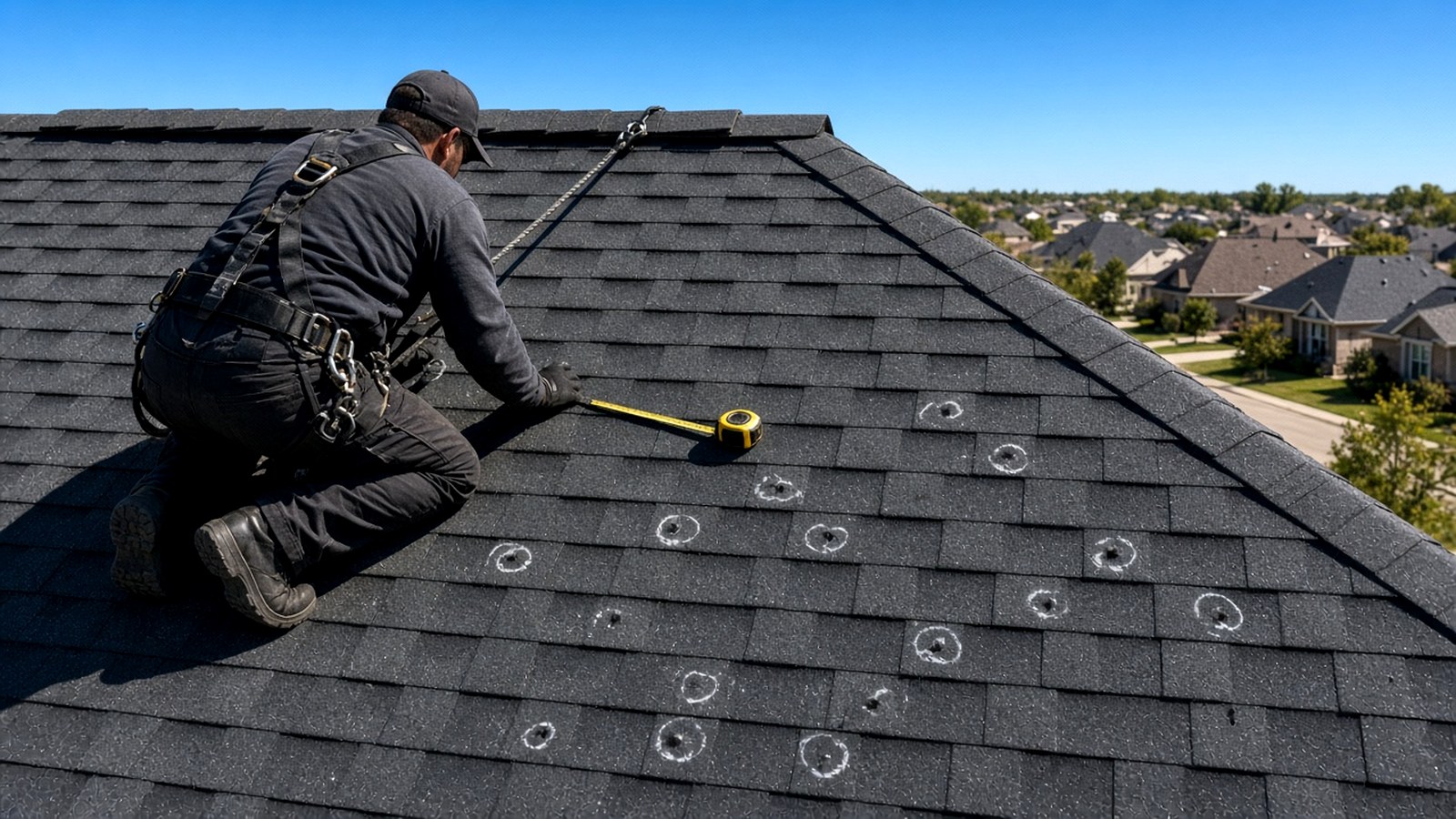
After a storm, the real question is how much the policy will pay.
Replacement Cost vs. Actual Cash Value
The Texas Department of Insurance (TDI) explains that most home policies pay to repair or rebuild at current costs, which is replacement cost coverage. Some policies instead pay less based on age and condition, which is actual cash value coverage. TDI notes that these policies cost less but also pay less when you have a claim.
TDI's replacement cost vs. actual cash value guide shows how this plays out for a $200,000 home with a 2% ($4,000) deductible and a $10,000 roof replacement after a covered storm:
- Replacement cost, any roof age: the roof is valued at $10,000, and you receive $6,000.
- Actual cash value, 5-year-old roof: valued at $8,500, and you receive $4,500.
- Actual cash value, 10-year-old roof: valued at $7,000, and you receive $3,000.
- Actual cash value, 20-year-old roof: valued at $4,000, and you receive $0.
Each payout is after the $4,000 deductible in TDI's example.
What Actual Cash Value Means at 15 Years
TDI's example does not include a 15-year row. A 15-year-old roof falls between the 10-year and 20-year examples, and your own policy's depreciation method sets the exact figure. On an actual cash value roof claim, the lesson is that the depreciated value can shrink toward the size of the deductible.
Hypothetical example: A Princeton homeowner has a 15-year-old architectural roof and an actual cash value policy with a $5,000 wind and hail deductible. A spring storm damages every slope, but depreciation leaves the roof valued at less than $5,000, so the claim may pay little or nothing toward it. On a replacement cost policy, the same homeowner would be paid the replacement cost minus the deductible. These numbers are illustrative only; your policy sets the real ones.
Questions to Ask Your Insurer
In its consumer column on replacing your roof with insurance, TDI recommends asking your company or agent:
- Do I have replacement cost or actual cash value coverage for the roof?
- Will the policy cover the roof if it is old or in poor condition? TDI notes a company might not.
- What is my wind and hail deductible? It can be higher than your other deductibles.
- Could I get a discount for materials that resist wind, hail, or fire if I replace the roof?
For a deeper walkthrough of claims and depreciation holdbacks, see our guide on whether homeowners insurance will pay for a new roof in Texas.
What a 15-Year-Old Roof Means When You Sell
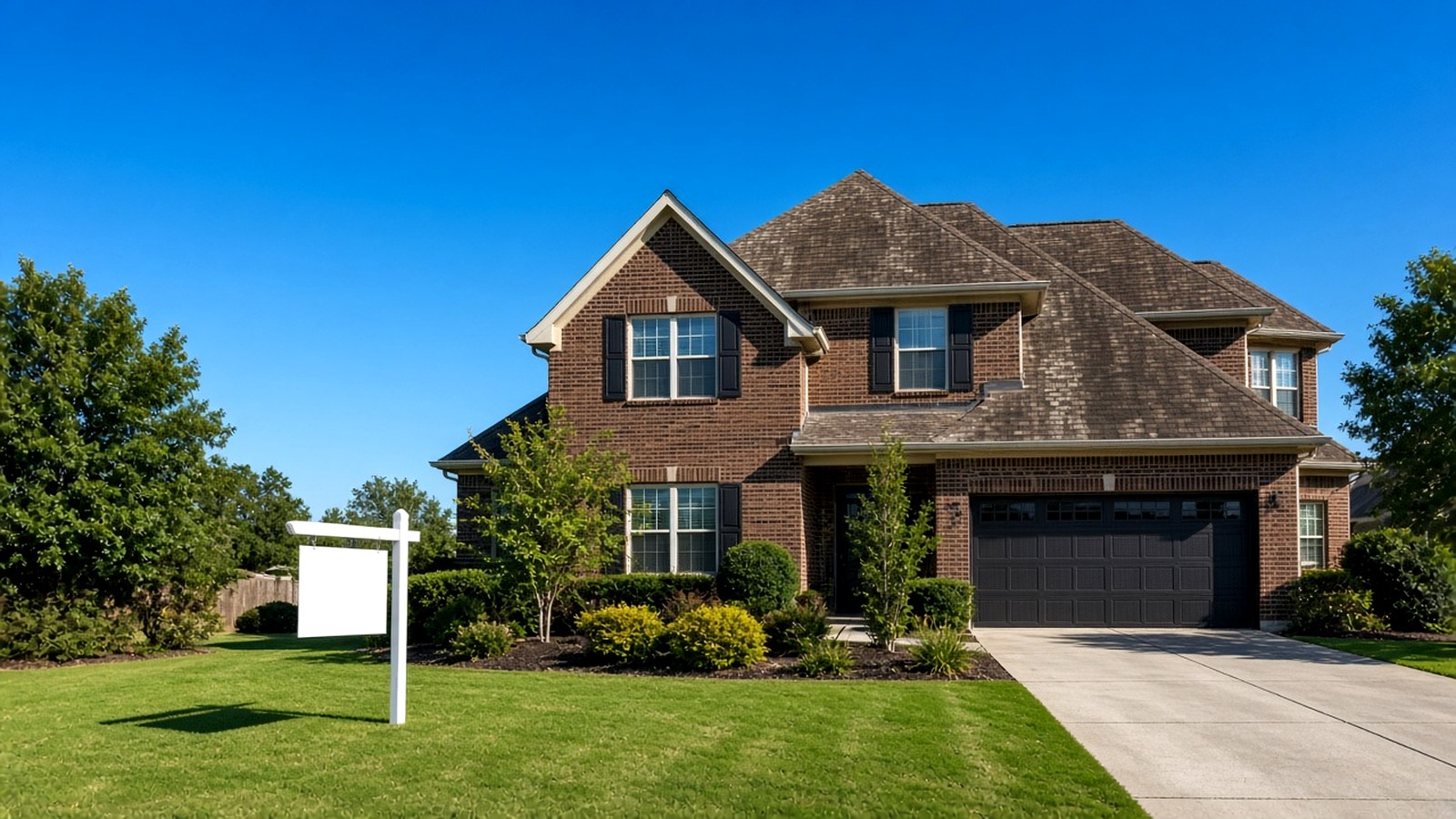
When you list a home, the roof's age shows up on paperwork whether you bring it up or not.
Texas Seller's Disclosure Asks for Roof Age
The Texas Real Estate Commission's Seller's Disclosure Notice is required for sellers of previously occupied single-family homes and carries the disclosures required by Section 5.008 of the Texas Property Code. The current form (TREC No. 55-1) asks for the roof type and its approximate age, any known roof defects, and any previous structural or roof repair. Keep your install paperwork handy so the age you write down is accurate.
Lenders and Appraisers Look at Remaining Life
If your buyer uses an FHA loan, HUD's Single Family Housing Policy Handbook 4000.1 requires the appraiser to flag a roof covering that does not keep moisture out or lacks a remaining physical life of at least two years. When the roof has less than two years of life left, the appraisal is made subject to inspection by a professional roofer. A worn-out roof can slow a closing.
Should I replace my roof before selling? It depends on condition, but the payback data is worth knowing first. So how much value does a new roof add? The 2025 Cost vs Value Report from the Journal of Light Construction estimates:
- Dallas: a $28,211 job adds an estimated $16,053 in resale value, recouping 56.9%.
- West South Central region: a $27,116 job adds $18,478, recouping 68.1%.
- National average: a $31,871 job adds $21,501, recouping 67.5%.
Those figures describe a standardized project: a full tear-off and 30 squares of fiberglass asphalt shingles on a rectangular hip roof with two skylights. That is larger than many local homes, and our 2026 new roof cost guide puts typical North Dallas architectural replacements at $9,000 to $15,000 installed. The takeaway is the percentage: a new roof usually adds some resale value, but not dollar for dollar.
A Quick Tax Note for Sellers
IRS Publication 523, Selling Your Home, lists a new roof as an example of an improvement that increases your home's basis, which can reduce the taxable gain on a sale. The same publication says routine repairs, such as fixing leaks, do not add to basis. Keep your roofing invoices, and ask a tax professional how this applies to you.
Repair, Replace, or Sell As-Is?
There is no single right answer for a 15-year-old roof. The decision usually comes down to its condition, your coverage, and your timeline.
- Keep and maintain: best when granule cover is good, flashing is sound, and the decking is dry. Confirm your coverage type and roof age with your insurer.
- Repair and document: best when damage is isolated to one slope, a pipe boot, or flashing. Our guide suggests replacing once a repair estimate passes 50% of replacement cost.
- Replace before listing: best when wear is widespread or there is hail bruising or leaking. Cost vs Value data suggests partial payback, not full.
- Sell as-is with disclosure: best when the roof works and the price reflects its age. Buyers' inspectors and FHA appraisers will still evaluate it.
Our roof repair or replace decision guide walks through those breakpoints, and the roof cost calculator gives you a ballpark for full replacement.
North Texas Factors: Hail, Heat, and Roof Age
Three local realities shape what a 15-year-old roof is worth here.
Hail Season Hits Every Year
As our Texas hail season guide explains, hail risk in Texas builds from March, peaks in May, and stays active into June. A 15-year-old roof in Farmersville, Princeton, or McKinney has typically been through many of those seasons. Hail bruising is not always visible from the ground.
Heat Shortens Asphalt Life
InterNACHI's chart notes that hot climates drastically reduce asphalt shingle life. Long stretches of summer heat, combined with an under-ventilated attic, can age shingles faster than the warranty years suggest.
Policies Treat Older Roofs Differently
TDI notes that most policies pay less if the roof is older or showing wear, and that a company might not cover a roof that is old or in poor condition. Policy terms vary by company, so read your declarations page and endorsements rather than relying on a general rule.
How to Document Your Roof's Age and Condition
Whether you are keeping the house, filing a claim, or selling, documentation protects the value you have:
- Find the install date: Check closing documents, roofing invoices, or the city permit record for your address.
- Get a professional inspection: Ask for dated photos of every slope, the flashing, the penetrations, and the attic.
- Update your insurer: Confirm the roof age and material on your policy are correct.
- Keep repair receipts: They support your disclosure and help separate repairs from improvements at tax time.
- Compare options in writing: If replacement is on the table, see our roof replacement service for what a full project includes.
- Hypothetical example: A McKinney couple plans to list in the spring, and their inspection finds a 15-year-old roof with moderate granule loss but no leaks or soft decking. Instead of replacing, they fix two cracked pipe boots and keep the photo report and invoice. They list the roof age accurately on the disclosure. Buyers see the documentation rather than a guess.
Frequently Asked Questions
How much value does a 15-year-old roof have?
There is no fixed percentage. In TDI's examples, an actual cash value policy values a $10,000 roof at $7,000 at 10 years and $4,000 at 20 years.
Is a 15-year-old roof considered old in Texas?
Usually, yes, for asphalt. We typically see 18 to 22 years from architectural shingles and 12 to 15 years from 3-tab shingles in North Texas.
Will insurance cover a 15-year-old roof?
It depends on your policy. TDI explains that replacement cost coverage pays current costs regardless of age, while actual cash value coverage subtracts depreciation.
Should I replace a 15-year-old roof before selling my house?
Only if it is failing or likely to stall a sale. The 2025 Cost vs Value Report puts Dallas asphalt roof payback at about 56.9% of cost.
Do I have to tell buyers how old my roof is in Texas?
The TREC Seller's Disclosure Notice asks for the roof type, its approximate age, known roof defects, and previous roof repairs.
Can a 15-year-old roof pass an FHA appraisal?
It can, if it keeps moisture out and has at least two years of remaining physical life under HUD Handbook 4000.1.
Sources
- InterNACHI, Standard Estimated Life Expectancy Chart for Homes
- Texas Department of Insurance, Home policies: Replacement cost or actual cash value?
- Texas Department of Insurance, What to know about replacing your roof with insurance
- Texas Real Estate Commission, Seller's Disclosure Notice (TREC No. 55-1)
- U.S. Department of Housing and Urban Development, FHA Single Family Housing Policy Handbook 4000.1, Roof Covering section
- Internal Revenue Service, Publication 523, Selling Your Home
- Journal of Light Construction, 2025 Cost vs Value Report: Dallas, Texas
Get a Straight Answer on Your Roof
Want to know what your 15-year-old roof is really worth? Book a free roof inspection with Flying Cow Roofing, or call (469) 902-0727. We will photograph every slope and the attic and give you a written report you can share with your insurer, your agent, or a buyer.
A note on insurance: This article is educational. Flying Cow Roofing does not file, negotiate, or adjust insurance claims for homeowners. Your carrier and your policy decide what is covered, and a licensed public adjuster can represent you if you want help with the claim itself. We inspect the roof, document what we find, and give you a written estimate you can share with anyone.
This article is general information, not legal, appraisal, real estate, or tax advice.
Flying Cow Roofing recommends having a roofer walk the roof and document conditions with photos before you commit to any repair or replacement plan.