
September 14, 2026
How to Repair a Rubber Roof on a Home Addition or Porch
A rubber membrane is repaired by cleaning the area back to sound material, priming it, and bonding a compatible patch that extends well past the damage. The patch has to match the membrane. EPDM tape on TPO, or roof cement on either, will not hold through a Texas summer.
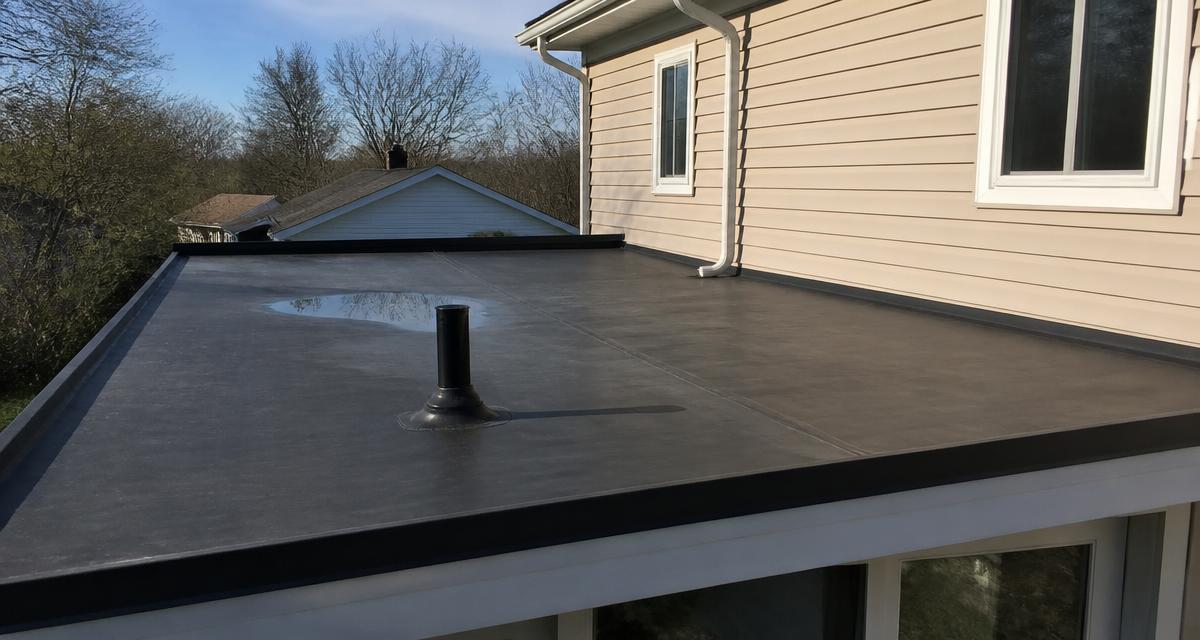
Plenty of North Dallas homes have a rubber membrane somewhere, even if the main roof is shingle. Porch covers, additions over a patio, dormer tops and low slope sections behind a parapet are all commonly membrane. This guide is about those residential sections.
Key Takeaways
- Identify the membrane first. EPDM is black and rubbery, TPO is usually white and stiffer.
- Most failures are at seams, edges and penetrations, not in the middle of the sheet.
- A correct patch extends at least three inches past the damage on every side.
- Ponding water that stays more than 48 hours is a slope problem, not a patch problem.
Step 1: Identify the membrane
- EPDM, often called rubber roofing, is black, flexible, and repaired with EPDM primer and cured rubber patches.
- TPO is typically white or grey, stiffer, and repaired by heat welding a TPO patch.
- Modified bitumen looks like a granulated rolled sheet and is torch or cold applied.
Using the wrong repair system is the single most common mistake. Nothing bonds to EPDM without primer, and nothing sticks to TPO except a heat weld or a TPO specific tape.
Step 2: Find the actual leak
On a membrane, water gets in at a defect and then travels between the membrane and the insulation, sometimes for several feet. Look at these first:
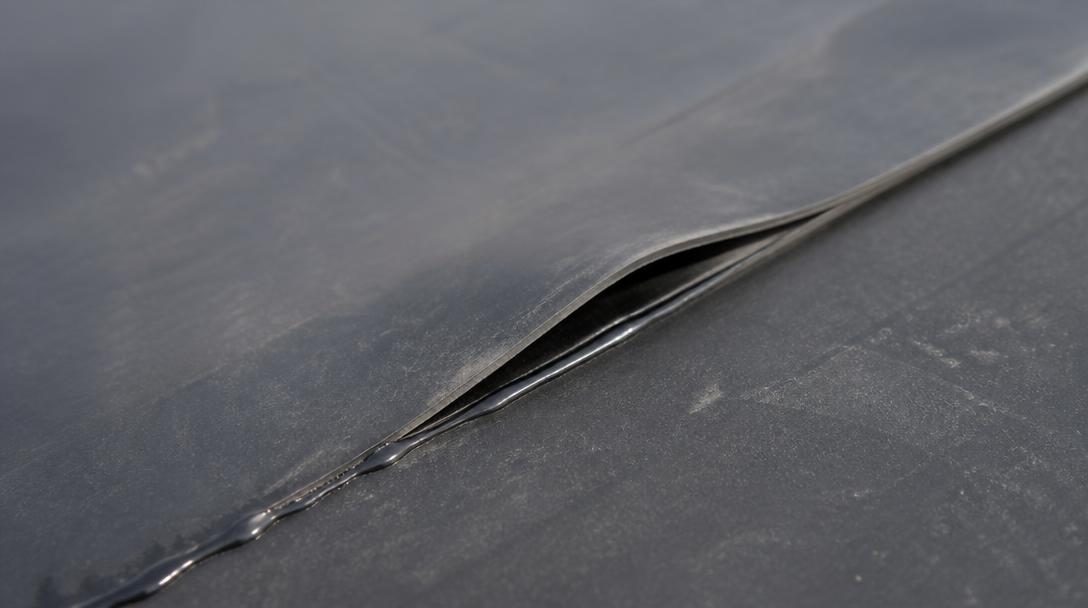
- Seams, especially where three sheets overlap.
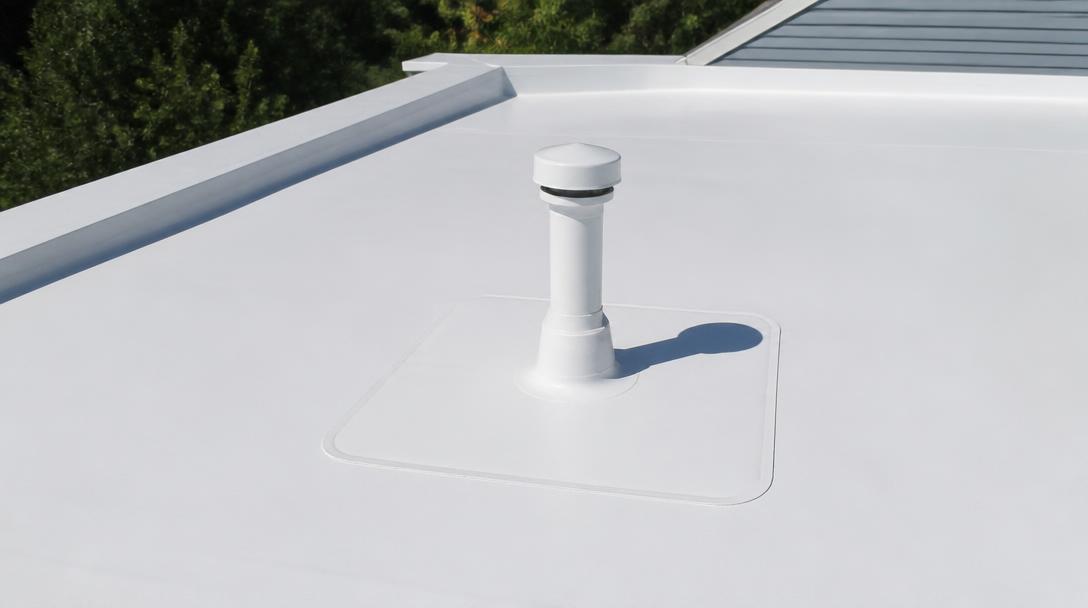
- Pipe and vent penetrations where the boot has shrunk.
- Perimeter edge metal and any termination bar.
- Where the membrane meets a wall.
- Punctures from dropped tools, furniture, or hail.
- Areas that hold standing water and have gone chalky.
A hose test, run in sections starting at the lowest point and working uphill, is the reliable way to pin it down.
Step 3: The correct repair
- Clean the area with the manufacturer cleaner and let it dry completely.
- Cut back any loose or delaminated membrane.
- Prime the area if the system calls for it, which EPDM always does.
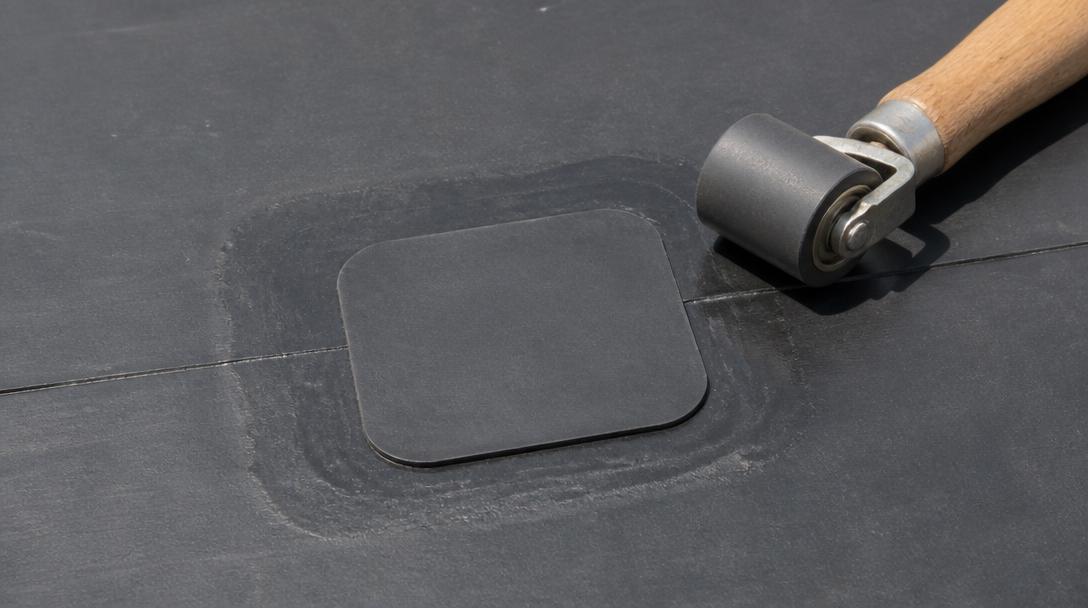
- Cut a patch with rounded corners, extending at least three inches past the damage all round.
- Roll it down firmly with a seam roller to drive out air.
- Seal the patch edge with lap sealant.
Rounded corners matter. Square corners lift first.
What not to use: asphalt roof cement, silicone caulk, duct tape, or a shingle patch. All of them fail within a season in Texas heat and they contaminate the surface so the proper repair afterwards is harder.
Step 4: Deal with ponding
If water sits on the section for more than two days after rain, the slope or drainage is wrong. Patching will not solve that. Options are adding tapered insulation, correcting a blocked scupper or drain, or re-covering the section with proper fall built in. Standing water accelerates membrane failure and is the reason many residential porch roofs fail early.
Costs in North Dallas
| Work | Usual range |
|---|---|
| Single patch repair | 300 to 700 dollars |
| Seam re-sealed, run of several feet | 500 to 1,200 dollars |
| Penetration or boot rebuilt | 400 to 900 dollars |
| Re-cover a small residential section | 8 to 14 dollars per square foot |
When to stop patching
Re-cover the section rather than repair it when the membrane is chalky and brittle across the whole area, when seams are failing in several places, when the insulation underneath is wet and spongy underfoot, or when the section is over twenty years old. Wet insulation must come out regardless. Roofing over it traps the moisture and the deck below will rot.
If the section is small and problematic, it is also worth asking whether a different assembly would suit the space better. Our guide to roofing materials for North Texas covers the practical residential options.
What North Texas weather does to a rubber roof
Most rubber roofs we see in Collin County are not whole roofs. They are the porch, the addition or the low slope run behind a two storey home in Allen, Wylie, Frisco and McKinney. The local pattern is consistent.
| Local condition | What it does to EPDM or TPO | Sign to watch for |
|---|---|---|
| Hail | Punctures and bruises the membrane, often near the fasteners | Small dimples that hold water after rain |
| UV and heat | Chalks the surface and stresses the seams | Powdery residue on your hand, lifting seam edges |
| Wind driven rain | Pushes water back under edge metal and terminations | Staining on the inside wall below the edge, not the middle |
The practical result is that a rubber section here tends to fail at its edges and seams long before the field of the membrane wears out, which is why a correct seam repair usually buys years rather than months. After a storm, the roof storm damage checklist covers what to photograph, and emergency roof repair covers what to do when water is coming in tonight.
Frequently Asked Questions
Can I patch a rubber roof myself?
A small puncture on an accessible ground floor porch is within reach for a careful homeowner using the correct primer and patch kit. Seam failures, wet insulation and anything at height should go to a roofer.
What is the best sealant for a rubber roof?
There is no universal one. Use the lap sealant made for your membrane type. EPDM lap sealant on TPO, or asphalt cement on either, will fail.
How long does a rubber roof last in Texas?
EPDM commonly gives twenty to twenty five years here, TPO around twenty, less where water ponds or where the surface gets regular foot traffic.
Why does my flat porch roof leak only sometimes?
That usually means wind driven rain reaching an edge detail or a seam that is only marginally open. It still needs repairing, because the defect grows.
Can you shingle over a rubber roof?
No. Shingles need slope to work. On a low slope section they will leak, whatever is underneath.
Get the section inspected
Flying Cow Roofing is a family run residential roofer based in Farmersville, serving Plano, Frisco, McKinney, Allen and the wider North Dallas area. Call (469) 902-0727 or book a free roof inspection and we will tell you whether it is a patch, a re-cover, or a drainage problem.