
September 21, 2026
Roof Storm Damage Checklist for Collin County Homes
Work through this roof storm damage checklist within a day or two of the storm, before the next round of weather arrives. Start from the ground, check the gutters and soft metal, look in the attic, then photograph everything with the date on it. In Collin County, hail and straight line wind are the two causes that matter most. Flying Cow Roofing inspects roofs across Farmersville, McKinney, Princeton, and the surrounding cities at no charge. Call (469) 902-0727.
What should be on a roof storm damage checklist?
A useful checklist moves from the safest vantage point to the most revealing one. You never need to climb on the roof to find out whether you need a professional look.
| Step | Where you stand | What you are looking for |
|---|---|---|
| 1 | Front and back yard | Missing, lifted, or curled shingles, a line of debris, displaced ridge caps |
| 2 | Along the drip edge | Granules washed into gutters, dents in gutters and downspouts |
| 3 | Soft metal surfaces | Dimples in vents, flashing, garage door, AC condenser fins, mailbox |
| 4 | Walls and windows | Cracked siding, torn screens, broken seals, pockmarked window trim |
| 5 | Inside the attic | Damp decking, daylight through the deck, wet insulation, stains on rafters |
| 6 | Inside the living space | New ceiling stains, bubbling paint, a musty smell after rain |
| 7 | Documentation | Dated photos of every finding plus a written note of the storm date |
Finish all seven steps before you call anyone. A homeowner who can say "granules in the gutter, dimples on the AC fins, one stain in the hall ceiling" gets a far more useful conversation than one who says "I think we got hail."
What can you check from the ground safely?
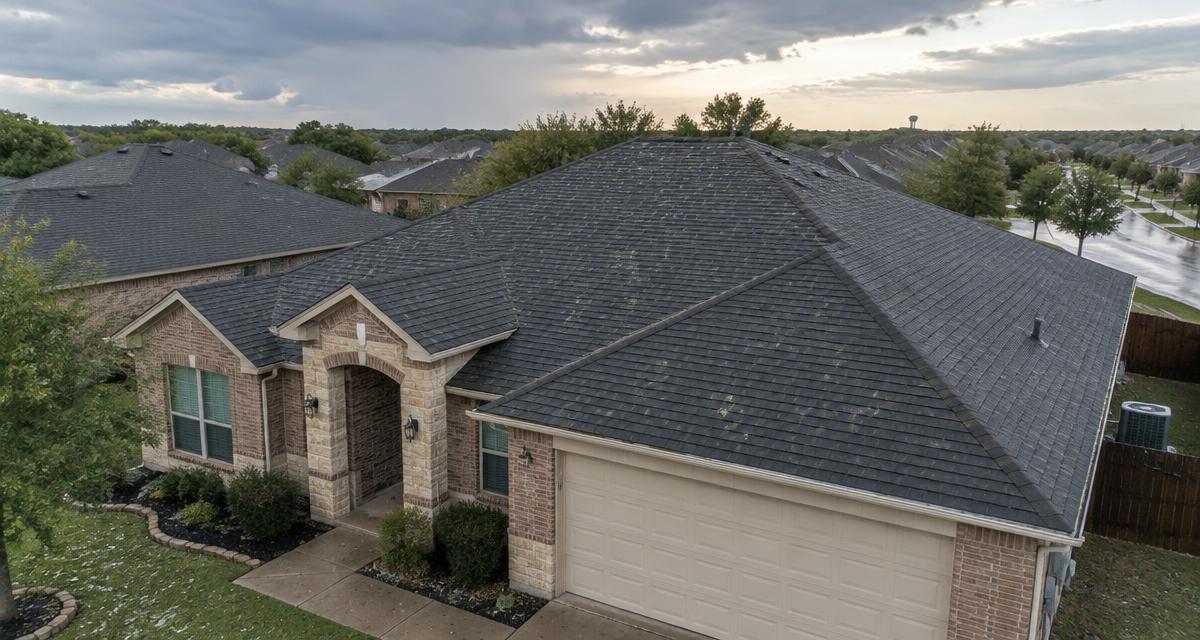
Walk a full lap of the house and look up at each slope in turn. Morning or late afternoon light works best because the low angle makes lifted shingles cast a shadow.
- Shingles that sit higher than their neighbors, which usually means the seal strip broke in wind
- Bare patches where a shingle tab is gone completely
- Ridge and hip caps out of line along the peak
- Pieces of shingle in flower beds, on the driveway, or against the fence
- Tree limbs resting on the roof or against the gutter
- A skylight or vent cap that has shifted
Straight line wind tends to damage one side of the house, usually the slope that faced the storm. Hail scatters across every slope but hits the ones facing the storm hardest. If you only see problems on one elevation, wind is the likely cause.
How do you tell hail damage from normal wear?
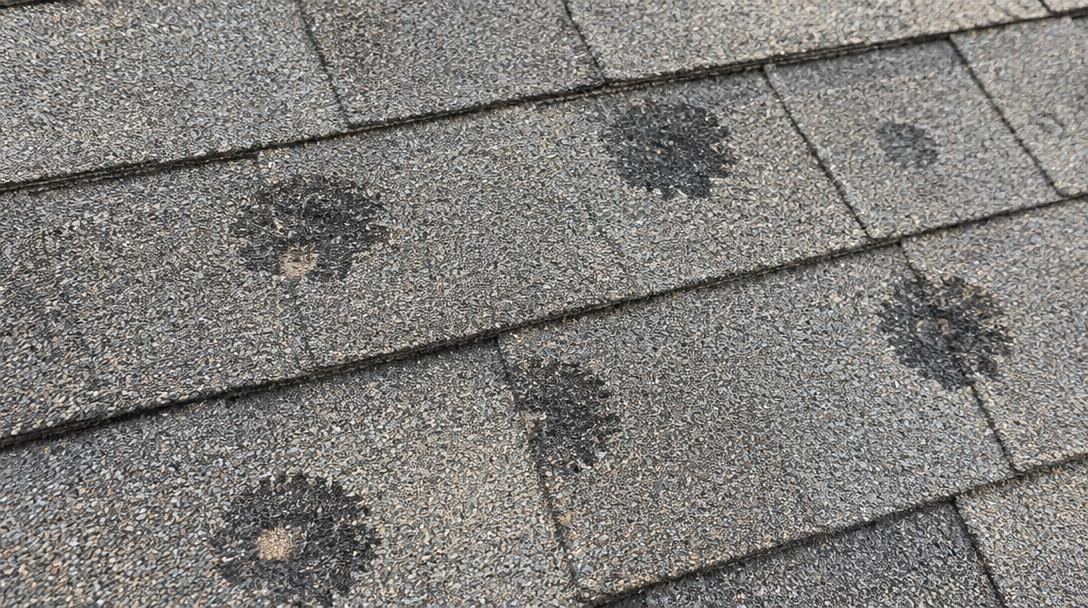
Hail bruises look like dark, roughly circular spots where the granules were knocked off, and the mat underneath feels soft when pressed. Age related wear looks different: granule loss is even across the slope, and the shingle edges are brittle rather than soft.
| Sign | Hail damage | Normal aging |
|---|---|---|
| Pattern | Random circular strikes | Even, gradual thinning |
| Feel | Soft, bruised spot | Brittle, dry |
| Location | Worst on storm facing slopes | Uniform across the roof |
| Timing | Appears right after a storm | Builds over many years |
| Companion clues | Dents in gutters and vents | No metal damage |
The metal check settles most arguments. Hail that is big enough to bruise a shingle will almost always leave marks on gutters, vents, or the air conditioner housing. No dents anywhere on the soft metal makes a hail claim hard to support.
What do the gutters and soft metal tell you?
Gutters are the easiest evidence on the whole house because you can see them from a step stool.
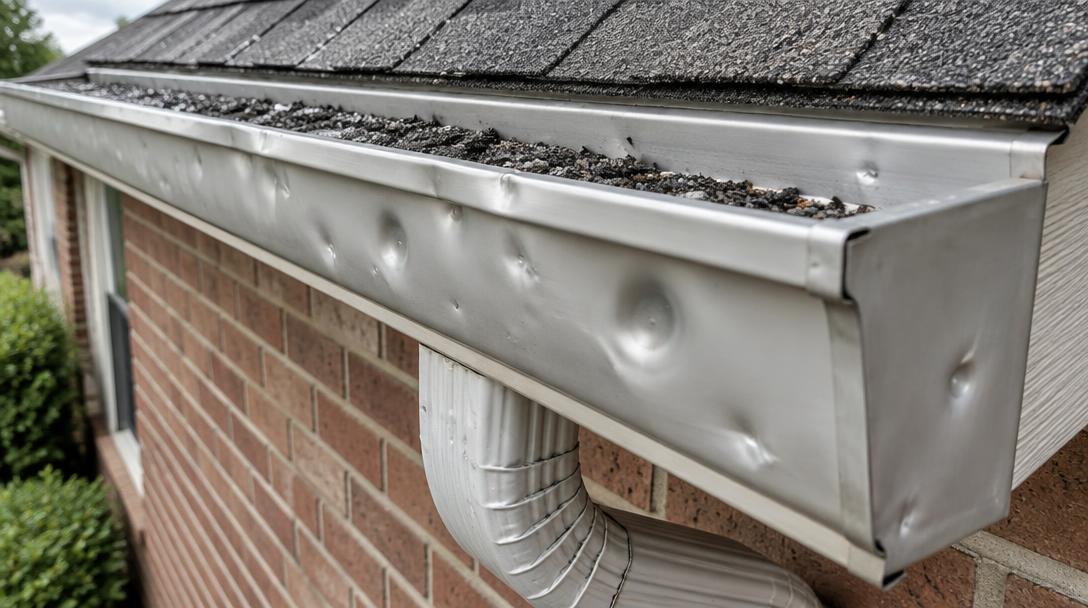
- Look inside the gutter trough for a heavy layer of granules, which is shingle surface that washed off during the storm.
- Run your eye along the outside face of the gutter for shallow round dents.
- Check the downspouts, especially the elbows, where dents show up clearly.
- Look at roof vents, pipe boots, and any exposed flashing for dimples.
- Check the air conditioner condenser fins, the garage door, and the mailbox. These are hail's favorite witnesses.
A small amount of granule loss is normal on any roof. A thick bed of granules that appeared after one storm is not.
What should you look for inside the attic?
The attic is where a small roof problem becomes a visible one first. Take a flashlight and go up during daylight, ideally a day or two after rain.
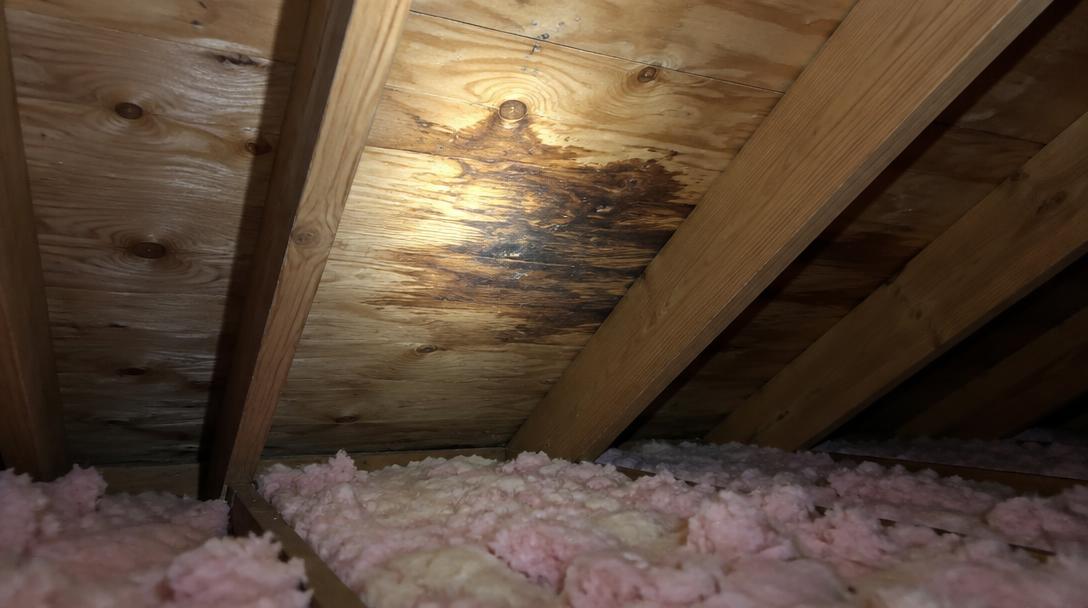
- Sweep the light across the underside of the decking and look for dark stains or streaks
- Look for pinpoints of daylight through the deck or around penetrations
- Feel the insulation near the eaves and around chimneys and vents for damp spots
- Check the nail shanks poking through the deck for rust or beads of moisture
- Smell for the damp, earthy odor that follows a slow leak
Photograph anything you find, including the rafter bay location, so a roofer can match the attic finding to the exact spot on the roof.
How should you document storm damage for your insurer?
Documentation is the part homeowners skip and later regret. Do it before any repair, tarp, or cleanup changes what the roof looks like.
- Wide shots of each elevation of the house, so the roof is in context
- Close shots of every specific finding, with a coin or tape measure for scale
- Photos of the gutters, vents, air conditioner, and any dented metal
- Interior photos of stains, wet insulation, and damaged belongings
- A dated note of the storm, which you can confirm against the National Weather Service Fort Worth office records
- Your policy number and the date you reported the damage
We inspect the roof and document each slope with photographs so you and your adjuster can see the same evidence. We do not file the claim for you and we cannot promise how an insurer will decide. The Texas Department of Insurance publishes plain language guidance on the homeowner side of the process.
When does storm damage need a roofer the same day?
Most storm damage can wait for a scheduled inspection. A few situations cannot.
| Situation | Response |
|---|---|
| Water actively coming through a ceiling | Same day, contain it inside first |
| Ceiling bulging or sagging | Same day, this can fall |
| Large area of shingles gone, decking exposed | Same day if rain is forecast |
| A limb through the roof | Same day |
| Scattered missing shingles, no leak | Schedule within the week |
| Granule loss and gutter dents only | Schedule an inspection |
If water is moving right now, the first hour matters more than the roof does. Our guide to emergency roof repair in Collin County walks through exactly what to do while you wait for a crew.
What happens during a professional storm inspection?
A thorough inspection is slower than most homeowners expect, because the roofer is building a record rather than glancing at a slope.
- A walk of the perimeter and a photo set of each elevation.
- A slope by slope walk of the roof, marking test squares to count strikes.
- Inspection of flashing, valleys, pipe boots, and vents, where leaks usually start.
- An attic check for decking moisture and daylight.
- A written summary with the photos attached.
Roofing systems that hold up well in North Texas hail country include Malarkey Vista and CertainTeed Belmont, both of which we install. The National Roofing Contractors Association and the Insurance Institute for Business and Home Safety both publish independent material on impact performance if you want to read further before choosing.
You can see how we handle the whole process on our storm and hail damage page, or start with a free roof inspection.
Local context: why Collin County roofs take a beating
North Texas sits in one of the most active hail corridors in the country, and Collin County catches a share of it most spring seasons. Neighborhoods built in the same few years also tend to have roofs of the same age, which is why one street can see a run of replacements after a single storm while the next street over stays quiet.
Two practical consequences for homeowners here:
- After a widespread storm, honest local crews book up fast. Getting on the list early matters more than shopping ten quotes.
- Out of town crews arrive within days. Before you sign anything, read our notes on how to know if a roofing contractor is legitimate.
Frequently asked questions
How soon after a storm should I inspect my roof?
Within a day or two, as soon as the weather is safe. Early inspection catches problems before the next rain turns a small opening into an interior leak, and it keeps your photo record close to the storm date.
Can I check for storm damage myself?
Yes, from the ground, from a stable ladder at the gutter line, and from inside the attic. Do not walk on a roof after hail or wind. The surface is loose underfoot and roof falls cause serious injuries every storm season.
Does granule loss alone mean I need a new roof?
Not by itself. Some granule loss happens on every roof over time. Sudden heavy granule loss after one storm, combined with bruising and dented metal, is the pattern that usually points to real damage.
What if I find nothing but my neighbor is getting a new roof?
Hail is patchy, so one house can be hit while the next is spared. It is still worth a free inspection, because bruising on a shingle is easy to miss from the ground and hard to see from a ladder.
Do I need to report damage before calling a roofer?
Either order works. Many homeowners get an inspection first so they can describe the damage accurately when they call their insurer. We document what we find and give you the photos regardless of what you decide to do next.
Get a free storm damage inspection in Collin County
If your roof took a hit, Flying Cow Roofing will walk it, photograph every slope, and give you a written summary you can keep. No cost, no pressure, and a straight answer about whether you need a repair, a replacement, or nothing at all right now.
Call (469) 902-0727 or request your free inspection online.
Flying Cow Roofing 3611 Ray Roberts Dr, Farmersville, TX 75442 (469) 902-0727