
October 5, 2026
How to Spot Water Damage or Roof Problems in Collin County
To spot water damage or roof problems, look for ceiling stains that grow after rain, damp insulation, attic wood discoloration, peeling paint, and musty odors. Flying Cow Roofing helps Collin County homeowners separate likely roof leaks from plumbing or condensation clues, but the stain location alone rarely identifies the exact entry point.
Key takeaways
- A stain that changes after wind-driven rain points more strongly toward the roof or exterior flashing.
- A stain below a bathroom or supply line may indicate plumbing instead.
- Condensation often appears as widespread moisture rather than one isolated drip path.
- Photograph the area, note the weather, and avoid climbing onto a wet or storm-damaged roof.
- A roof inspection can trace the moisture path before interior repairs hide useful evidence.
Last updated: September 2026
What does roof-related water damage look like inside a home?
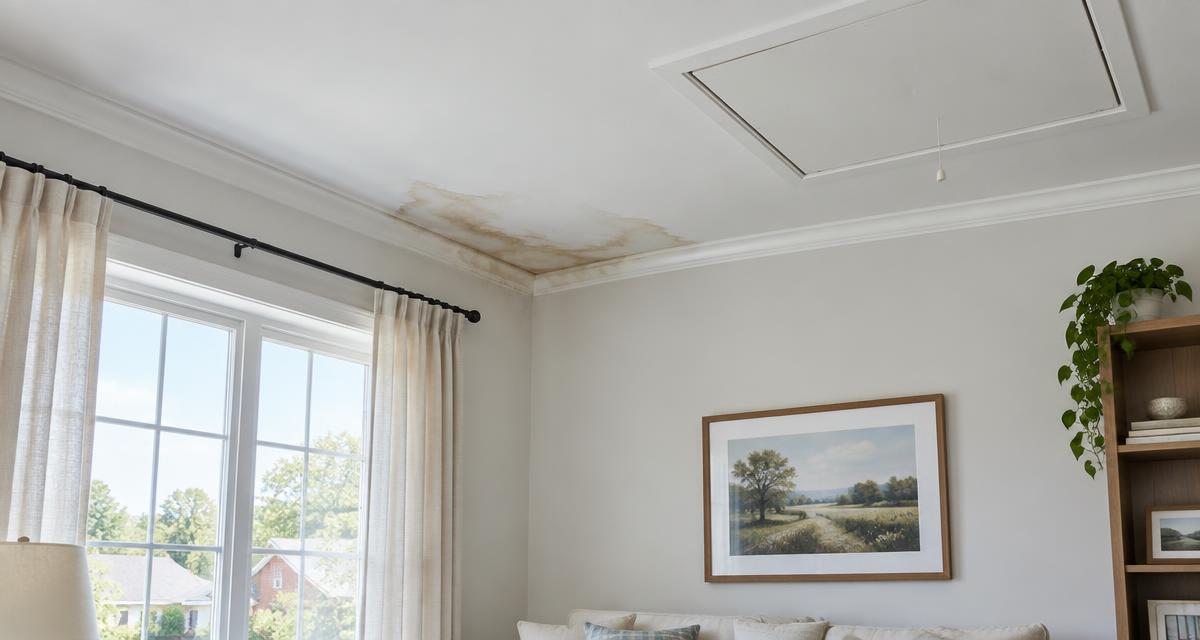
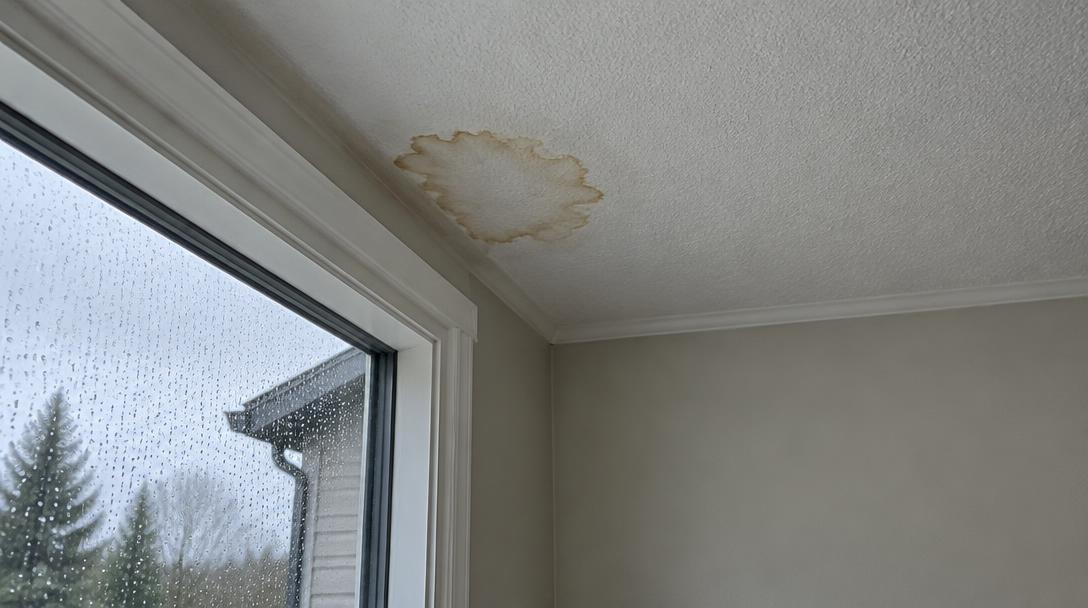
Roof-related moisture can appear as a yellow-brown ceiling ring, a darkened seam, bubbled paint, softened drywall, damp attic insulation, or stained roof decking. The mark may be several feet from the actual roof opening because water can travel along rafters, fasteners, pipes, and the top of the ceiling before it becomes visible.
Use these clues as a starting point, not a final diagnosis:
| Indoor clue | What it may suggest | What to record |
|---|---|---|
| Stain grows after rain | Roof, flashing, or exterior opening | Rain direction and timing |
| Drip below a bathroom | Supply, drain, or fixture leak | Whether a fixture was used |
| Moisture on many nails | Attic condensation | Temperature and humidity |
| Musty insulation | Ongoing or repeated moisture | Area, odor, and dampness |
Do not touch sagging drywall or a bulging ceiling. Keep people away from the area and move belongings if you can do so safely.
How can you tell whether a ceiling stain comes from the roof?
Start with timing. A mark that darkens during or shortly after rain is more consistent with a roof, flashing, vent, or exterior-envelope problem than a mark that changes when someone uses a shower, sink, or appliance. Wind direction also matters because wind-driven rain can reach openings that stay dry during a calm, straight-down shower.
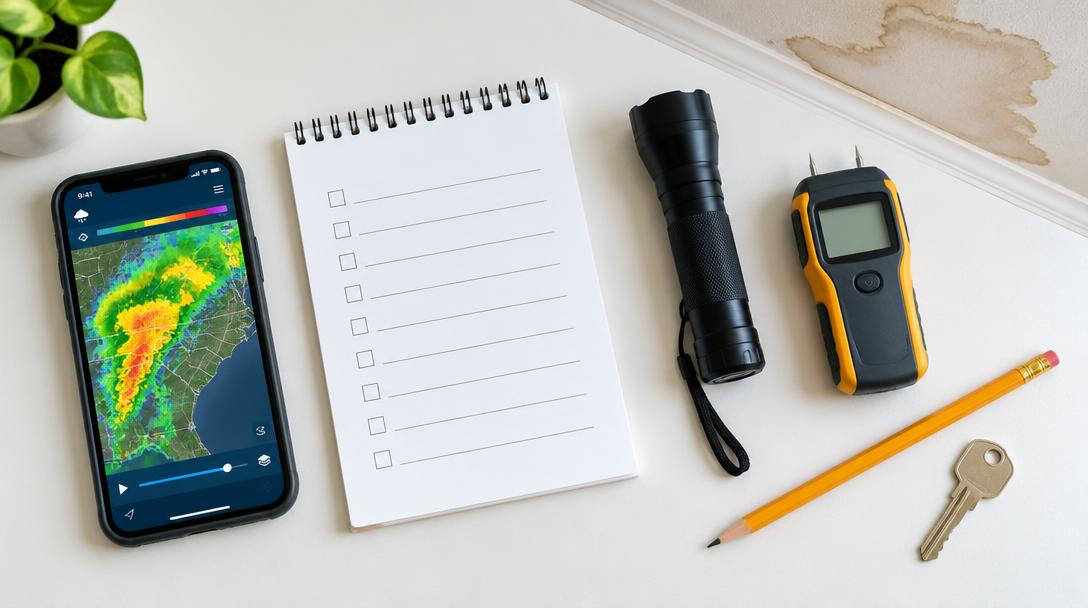
Follow this simple observation checklist:
- Photograph the stain before the next rain.
- Note the date, rain intensity, and wind direction.
- Check whether the stain expands or feels damp after the storm.
- Record whether plumbing fixtures above or nearby were used.
- Look from a safe attic walkway for damp insulation or wood staining.
The National Weather Service Fort Worth office provides local forecasts and storm information that can help you match a change indoors with weather in Collin County. If the stain tracks with rainfall, a professional inspection is the safer next step than guessing from the room below.
Could the problem be plumbing or condensation instead of the roof?
Yes. Water inside a home can come from the roof, plumbing, heating and cooling equipment, bathroom exhaust, or condensation. A plumbing leak may appear even in dry weather. Condensation is often associated with humid air meeting a cold surface, poor air sealing, or ventilation conditions, and it may affect a broader area.
| Pattern | Roof or exterior clue | Other possible source |
|---|---|---|
| Changes only after rain | Roof covering or flashing | Window or wall opening |
| Changes after fixture use | Less likely | Plumbing or drain line |
| Widespread damp roof nails | Possible ventilation issue | Condensation |
| Near an air handler or drain | Less likely | HVAC condensate |
If you want help connecting the indoor evidence to the roof, schedule a free roof inspection before repairing the ceiling finish.
The U.S. Environmental Protection Agency moisture and mold guide advises drying wet materials promptly, generally within 24 to 48 hours, to help limit mold growth. That guidance makes source identification and drying more urgent, even when you do not yet know whether the roof is responsible.
What can you safely check in the attic?
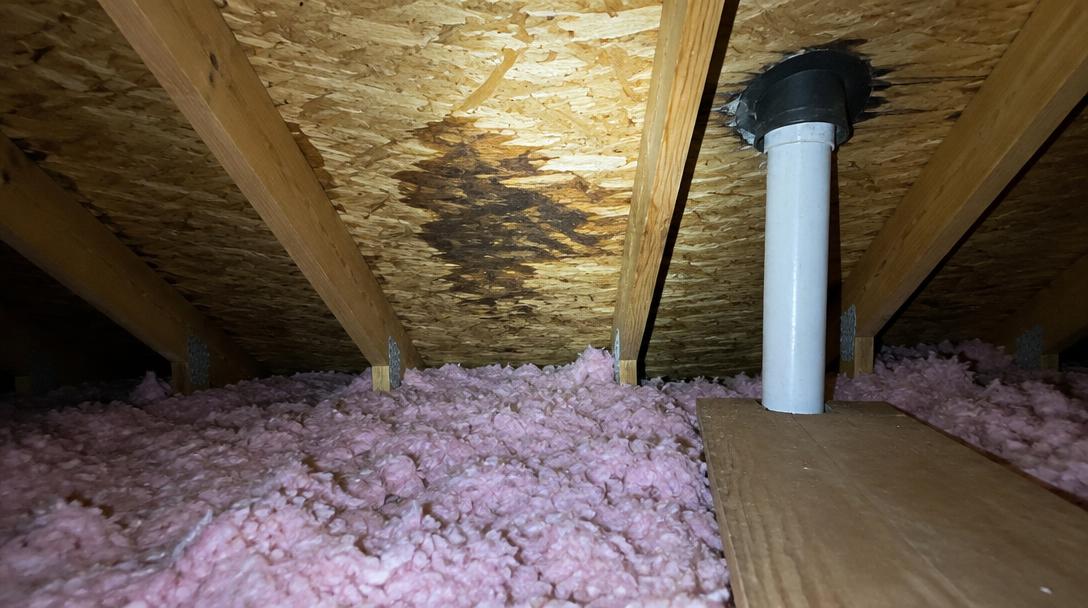
Only enter an attic if access is stable, lighting is adequate, and you can remain on a safe walking surface. Never step between framing members, and do not enter if electrical hazards, active dripping, sagging materials, or storm damage make the area unsafe.
From a safe position, look for:
- Dark trails or clean-looking water paths on roof decking
- Damp, compressed, or discolored insulation
- Rust or moisture around fasteners
- Daylight near a penetration, while remembering that some ventilation openings admit light by design
- Staining around plumbing vents, exhaust vents, chimneys, valleys, or roof-to-wall intersections
- Repeated moisture patterns rather than one old, dry mark
The Insurance Institute for Business & Home Safety FORTIFIED Roof guidance explains how a roof system can be strengthened against severe weather. If access is unsafe or the source is unclear, stop and arrange a residential roof inspection in Collin County.
Which roof areas commonly need closer inspection after a stain appears?
A stain often points to a drainage or transition area rather than the open field of the roof. Penetrations and intersections deserve close attention because they depend on properly integrated flashing, seals, and water-shedding details.
An inspector may evaluate:
- Pipe boots and other roof penetrations
- Roof-to-wall and sidewall flashing
- Valleys where two roof slopes meet
- Chimney flashing and nearby transitions
- Ridge, intake, and exhaust ventilation details
- Missing, lifted, cracked, or displaced roofing material
- Gutters, downspouts, and areas where water backs up
- Roof decking and attic surfaces below the suspected path
A ceiling stain does not show whether the solution is a small repair, a ventilation correction, or work outside the roof system. The goal is to trace the path and identify the cause before selecting a remedy. Our detailed guide on how to find a roof leak safely explains why the interior mark and exterior entry point may not line up.
What should Collin County homeowners document after a storm?
Start with ground-level and indoor evidence. Take wide photos showing the room and closer photos showing the stain, then save the original files with the date. Record when you first noticed the problem and whether it changed during a later storm.
| Evidence | Why it helps |
|---|---|
| Wide room photo | Establishes the stain location |
| Close stain photo | Shows edges, color, and growth |
| Weather notes | Connects changes with rain or wind |
| Attic photo from safe access | Shows moisture path or insulation |
| Ground-level exterior photo | Records visible debris or displaced material |
Do not climb onto the roof to collect evidence. After severe weather, loose materials and wet surfaces can create hazards that are not visible from the ground. The Ready.gov severe-weather guidance provides homeowner guidance on roof and property vulnerabilities during severe weather.
For a broader exterior and property walk-through, use the roof storm damage checklist for Collin County.
What should you do first when you find active water?
Protect people first, then limit additional interior damage without creating a new hazard. If water is near an electrical fixture, panel, or wiring, stay clear and contact the appropriate emergency professional. Do not puncture a bulging ceiling or handle wet electrical equipment.
Use this order:
- Keep people and pets away from sagging or wet materials.
- Move furniture and valuables only if the area is safe.
- Place a container beneath a simple drip when safe to do so.
- Photograph the affected area and note the time and weather.
- Arrange source identification and appropriate drying.
- Wait to repaint or close the ceiling until the moisture source is corrected.
Temporary interior steps do not repair the opening that allowed moisture inside. If rain is ongoing or the affected area is expanding, call Flying Cow Roofing at (469) 902-0727 to arrange a free roof inspection in Collin County.
When does a water stain need prompt professional attention?
Prompt attention is appropriate when moisture is active, the ceiling is sagging, insulation is saturated, an electrical fixture is nearby, the stain returns after rain, or the source cannot be identified safely. A small visible mark can still represent a longer moisture path above the ceiling.
Contact a qualified professional promptly when you notice:
- Active dripping or rapid stain growth
- Soft, bowed, or sagging drywall
- Wet materials near electricity
- Damp insulation or roof decking
- A musty odor that persists
- Repeated staining after storms
- Visible exterior damage from the ground
If conditions are immediately dangerous, leave the affected area and contact emergency services or the appropriate utility. For urgent roof-related conditions, review what to do during emergency roof repair in Collin County.
Frequently Asked Questions
Does a brown ceiling stain always mean the roof is leaking?
No. A brown stain shows that moisture reached the ceiling, but the source may be the roof, plumbing, HVAC condensate, or condensation. Timing and a safe inspection help separate the possibilities.
Can a roof leak appear far from the damaged roof area?
Yes. Water can travel along decking, framing, fasteners, pipes, and ceiling surfaces before becoming visible. The indoor stain may not sit directly below the entry point.
Should I paint over a ceiling stain after it dries?
Wait until the moisture source is identified, corrected, and the affected materials are properly dried. Painting too soon can hide a recurring problem without addressing its cause.
Is it safe to climb onto the roof to look for damage?
No homeowner should climb onto a wet, steep, or storm-damaged roof. Use ground-level observations and safe attic access, then rely on a qualified roof inspection for roof-level evaluation.
How soon should wet materials be dried?
The EPA advises drying wet materials promptly, generally within 24 to 48 hours, to help limit mold growth. Drying should happen alongside source correction so the area does not become wet again.
How can Flying Cow Roofing help identify the source?
Flying Cow Roofing can inspect accessible roof surfaces, penetrations, flashing, drainage areas, attic clues, and visible moisture paths for residential homes in Collin County. The inspection helps you understand whether the evidence points toward the roof and what next step fits the observed condition.
Get a free roof inspection in Collin County. Call (469) 902-0727 or request an inspection through the website so you can address the source before repairing the ceiling finish.