
November 6, 2026
Tree Damage to Roof: A Plano TX Prevention and Repair Guide
Written by Wayne Bangs, Owner, Flying Cow Roofing
Tree damage to roof problems in Plano range from a sudden limb strike in a storm to years of slow wear from branches and leaves. Big impacts crack decking and let water in, while overhanging limbs scrape shingles and clog valleys. Most of it can be prevented with trimming, and storm damage is often covered by insurance.
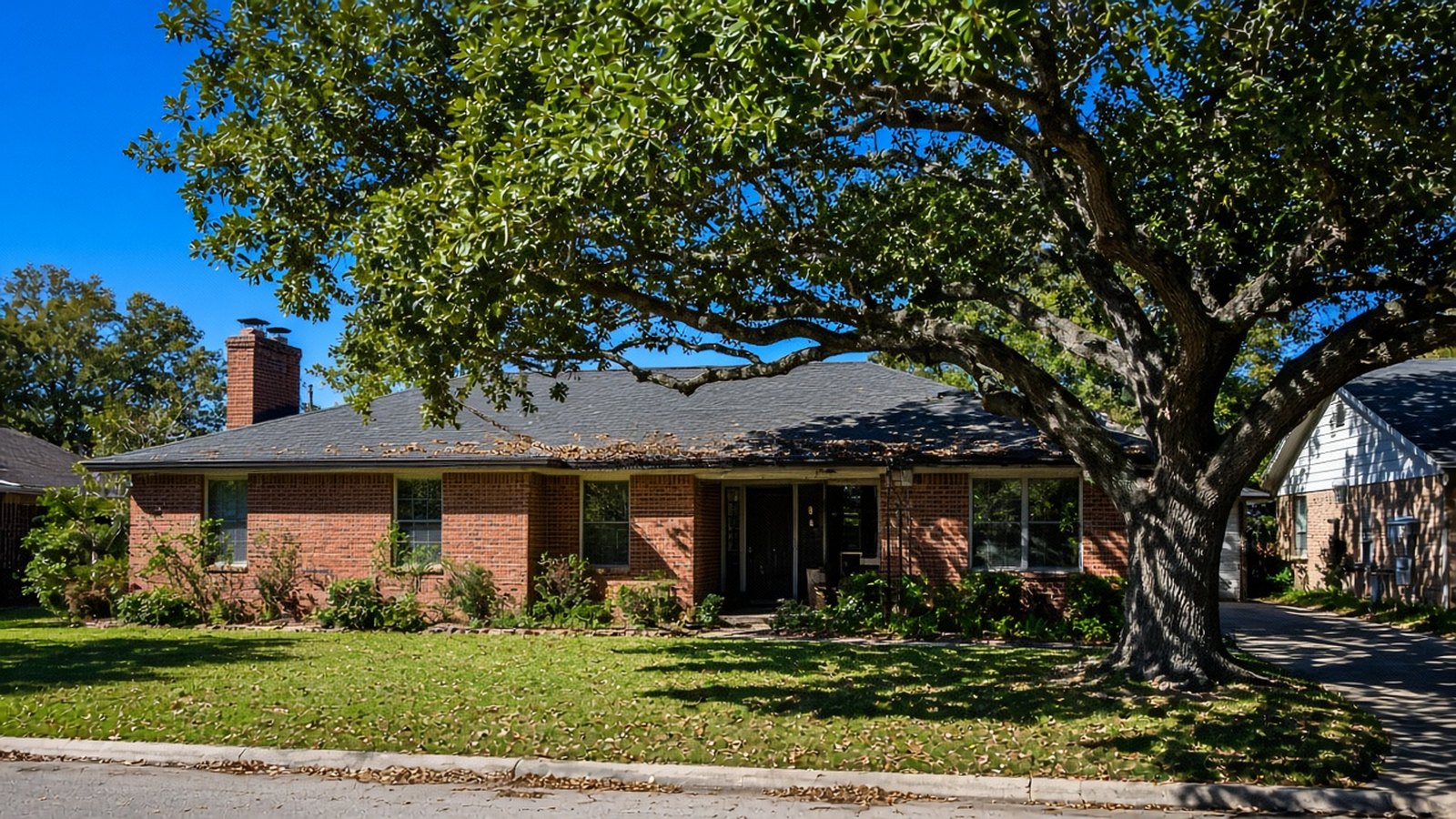
Plano's mature tree canopy is one of the best things about its older neighborhoods. It is also one of the most common reasons we find worn shingles, packed valleys, and leaks there. This guide covers prevention, what to do after a tree falls, what insurance usually pays for, and what Plano's codes require.
Key Takeaways
- Damage comes in two speeds: A falling tree or limb causes sudden damage, while rubbing branches and debris cause slow wear.
- Safety first after a strike: Stay out of damaged rooms, keep away from downed lines, and call 911 if wires are sparking.
- Policies often cover falling trees: The Texas Department of Insurance says many home policies pay for damage from falling objects such as trees.
- Removal coverage is limited: TDI notes tree removal is usually covered only if the tree hit the house or blocks the driveway.
- Never trim near power lines yourself: Oncor says only line-clearance-certified workers may work near high-voltage lines.
How Trees Damage a Roof
Trees damage roofs in a few different ways, and each one leaves different signs.
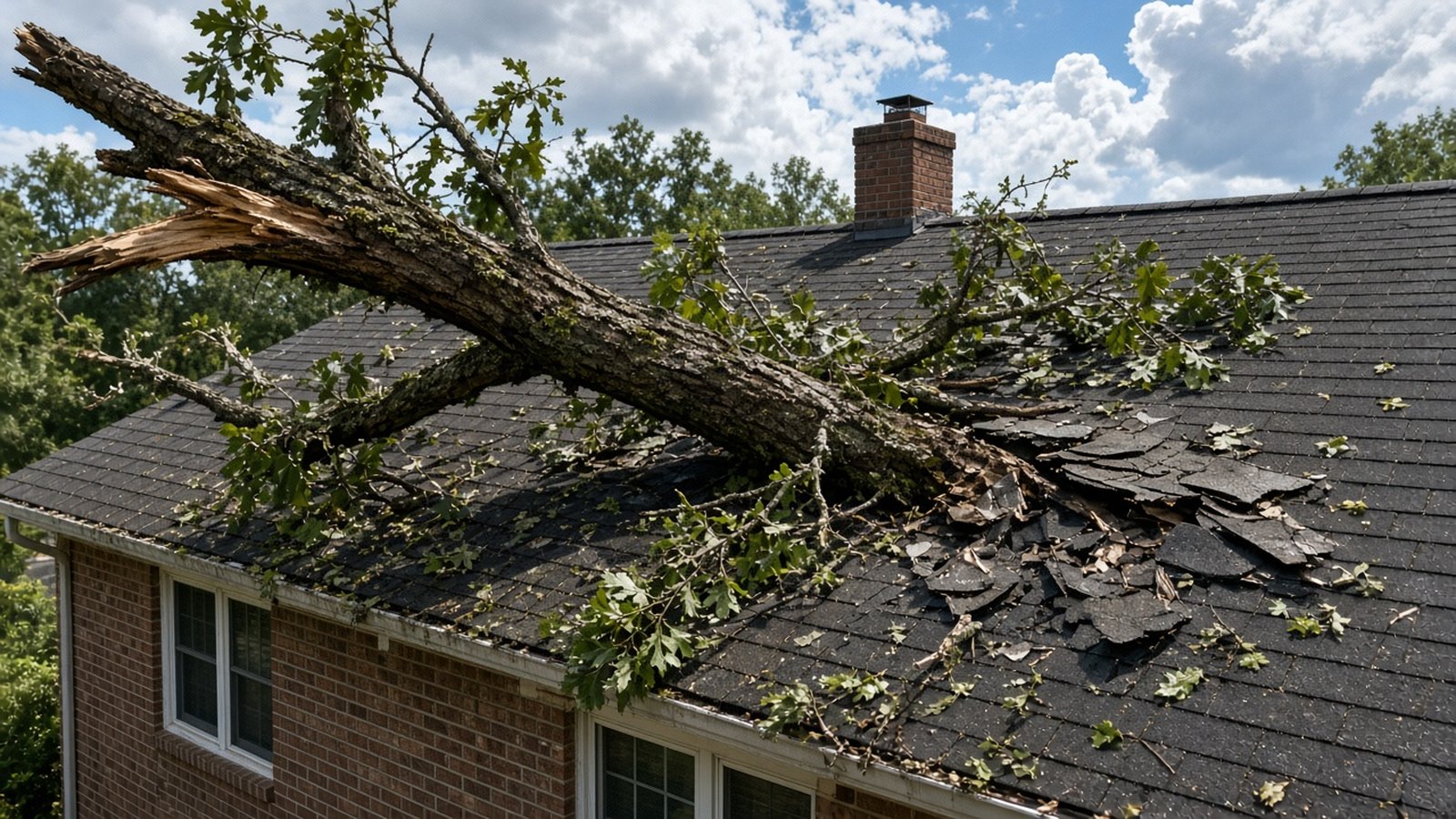
- Impact: A falling trunk or large limb can crack decking, break rafters, and punch holes through the roof.
- Abrasion: Branches that rest on or sweep across the roof scrape granules off shingles, especially in wind.
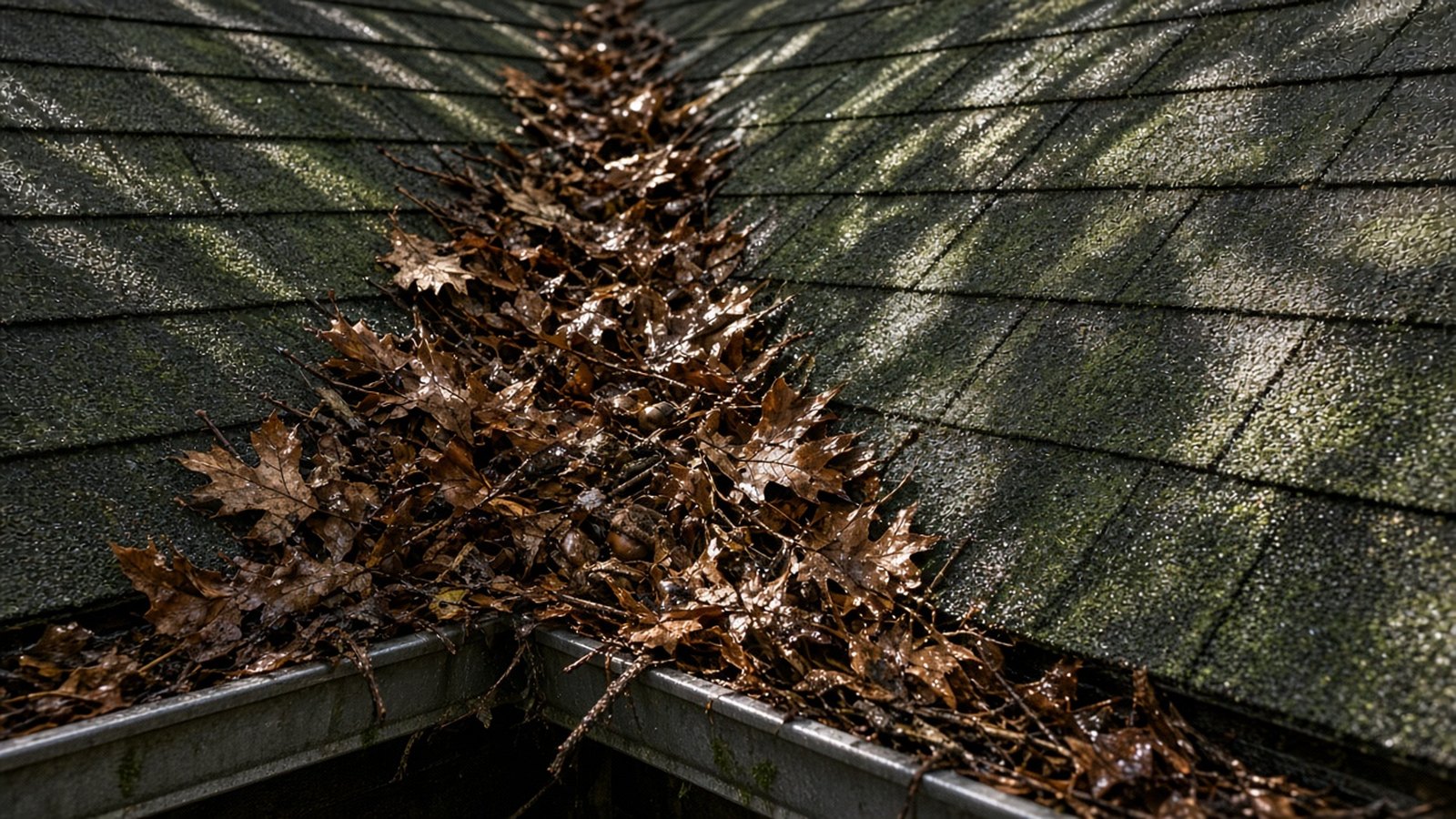
- Debris: Leaves, twigs, and seed pods collect in valleys and gutters, where they hold water against the roof.
- Shade and moisture: Constant shade slows drying after rain, so roofing stays damp longer.
- Access for pests: Overhanging limbs give squirrels and other animals a bridge to the roof and attic.
TDI lists damage from rodents and insects among the things a typical home policy will not cover. That makes trimming the cheapest protection you have.
Think a tree may have hurt your roof? A free roof inspection gives you dated photos of every slope and the attic.
Signs of Tree Damage to Look For
After a storm, or once a year if large trees hang over the house, walk the yard and look for these signs:
- Broken or missing shingles: Look for fresh tears, scuffs, or bare patches where a limb landed.
- Granule loss under branches: Shiny, dark streaks under overhanging limbs point to rubbing.
- Packed valleys and gutters: Leaves piled in valleys or overflowing gutters slow drainage.
- Sagging lines: A dip in the roofline or a cracked fascia can mean structural damage.
- Ceiling stains or attic light: Water stains, damp insulation, or daylight through the deck mean water is getting in.
If you see a stain but cannot find the source, our guide on how to find a roof leak explains how leaks travel before they show up indoors.
Tree Branches on Roof: Trimming and Prevention
Tree branches on roof surfaces are the slow-motion version of tree damage. The fix is mostly maintenance.
Keep Limbs Off the Roof
Have a tree service trim branches that touch, rest on, or sweep across the roof. Large limbs over the house should be checked by an arborist, especially if they are dead, cracked, or leaning. Ask the tree crew to lower cut limbs with ropes rather than dropping them onto shingles.
Keep Valleys and Gutters Clear
Plano's property maintenance code, which amends the 2024 International Property Maintenance Code, requires roofs and flashing to be sound and tight and gutters to be free from obstructions. Clearing valleys and gutters after leaf drop helps keep water moving off the roof. Our gutter installation service covers gutters sized for heavy leaf loads.
Power Lines: Leave Those Limbs to the Pros
Branches near power lines are a safety issue, not a do-it-yourself job.
- High-voltage lines: Oncor says never to trim near the lines running from pole to pole. State law allows only line-clearance-certified workers within 6 feet of high-voltage lines, and OSHA says non-certified workers must stay 10 feet away.
- Your service line: The line from the pole to your house is the customer's responsibility to keep clear. Oncor says you can ask for a temporary disconnect so a tree crew can work safely, which may carry a small charge.
- Reporting: Report trees on lines to Oncor at 888-313-6862. If a line is down or sparking, stay away and call 911.
Oncor also says it does not remove trees it did not cut, so a tree that falls without hitting its lines is the property owner's job.
When a Tree Fell on Roof: What to Do First
If a tree fell on roof framing or punched through the deck, follow these steps in order:
- Get everyone out of the damaged area: Ceilings under a heavy limb can fail without warning.
- Check for utility hazards: Stay clear of downed wires and call 911 for sparking lines.
- Photograph everything: TDI recommends taking photos and video of the damage before cleanup.
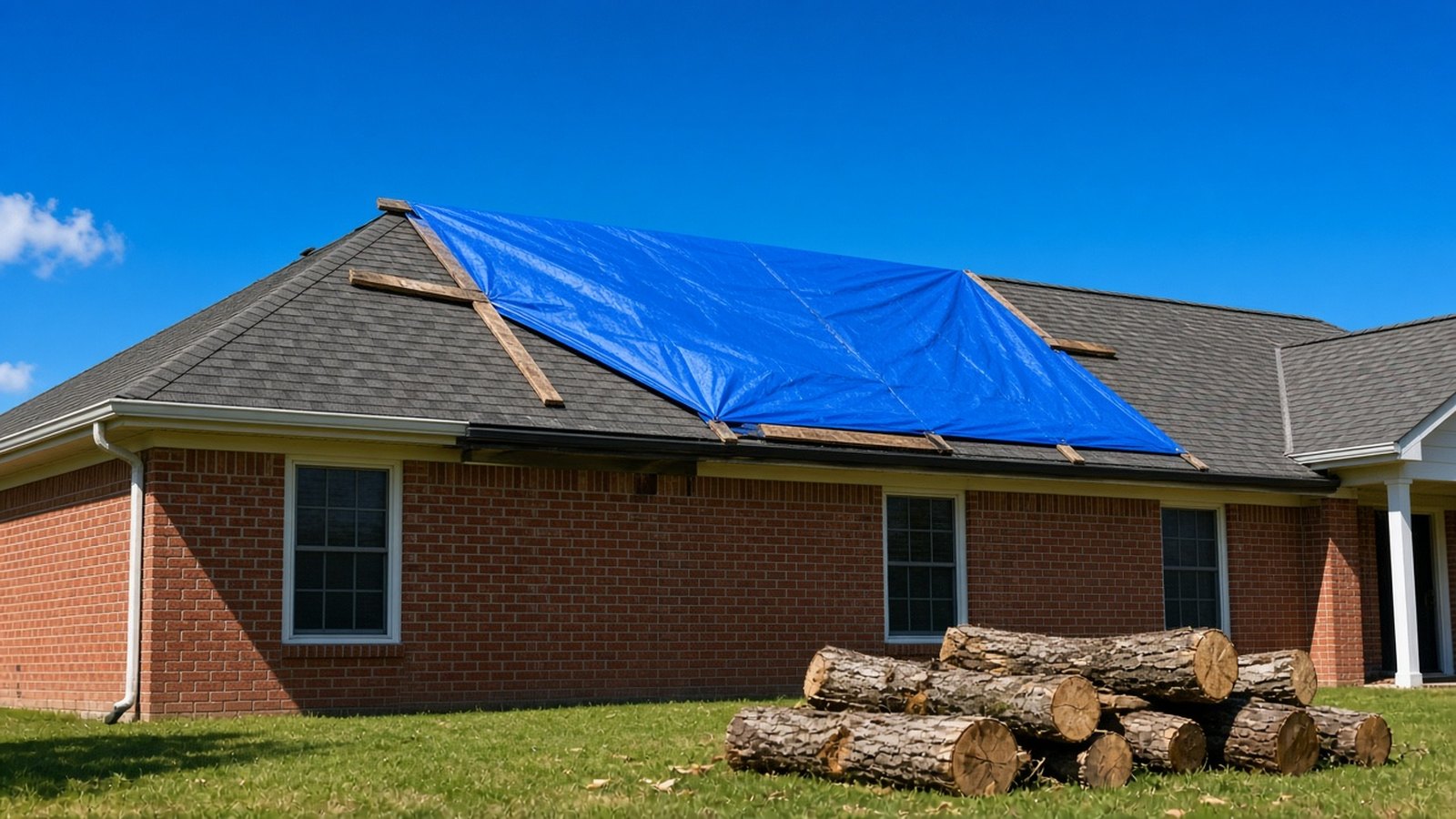
- Make temporary repairs only: TDI advises making only the repairs needed to prevent more damage, such as covering openings with a tarp. Keep your receipts.
- Call your insurer: Report the claim promptly and ask what it needs from you.
Do not climb onto a roof with a tree still on it. Large trees should be removed by a tree service before roofers can work safely. Our guide to emergency roof repair in Collin County explains how tarping and emergency calls work.
Does Insurance Cover Tree Damage to Roof?
Does insurance cover tree damage to roof framing and shingles? Often, yes, but the details matter. The Texas Department of Insurance explains in its storm damage FAQ:
- Falling objects: Many policies pay for damage caused by falling objects, such as trees.
- Tree removal: Removal is usually covered only if the tree damaged the house or blocks the driveway. A tree that falls in the yard usually is not covered.
- A neighbor's tree: You would probably file with your own insurer. The neighbor's policy probably will not pay unless the neighbor was at fault.
TDI's list of what a home policy won't cover includes wear and tear. Slow damage from rubbing branches can fall into that category, which is another reason to trim before it becomes a claim.
Plano Rules for Trees and Roof Repairs
Plano's property maintenance code sets clear rules for trees on private property.
Tree Maintenance Rules
The code requires dead or dying trees that threaten public health or safety to be removed, and damaged trees to be trimmed. Branches must clear sidewalks by at least 7 feet and streets by at least 14 feet. If an owner does not comply, the city can do the work and bill the cost plus a $250 administrative fee per lot.
Reroof Permits
Plano's residential reroof handout says reroofing work over 25 percent of the roof needs a permit, and the final inspection includes the attic. The handout dates from 2016, so confirm current rules with Plano Building Inspections at 972-941-7140. Our Plano roofing page covers what we see in local neighborhoods.
North Texas Factors for Plano Roofs
Plano is the oldest large suburb we work in. Many homes in West Plano date from the 1980s and early 1990s, and their trees have had decades to grow over the roof.
Storms and Soft Wood
Spring thunderstorms bring strong wind gusts that snap weak or dead limbs. A dead or cracked limb that looks fine in calm weather can fail in a strong gust.
Canopy and Older Roofs
Overhanging limbs hold moisture against shingles and drop debris into valleys. That quietly shortens the life of a roof that would otherwise be healthy. Older roofs with worn shingles are also less able to absorb a limb strike without cracking.
After any major storm, our storm damage checklist walks you through what to check from the ground before anyone climbs a ladder.
Repair or Replace After Tree Damage?
Most tree damage is repaired, not replaced. A clean puncture can usually be fixed by replacing the damaged decking, underlayment, and shingles in that area.
Replacement becomes more likely when the strike broke rafters or trusses, when damage spans several slopes, or when the existing shingles are too brittle to blend a repair. Matching an older shingle color can also be difficult.
Hypothetical example: A storm drops a large oak limb onto a Plano home's back slope. The homeowner photographs the damage, has a tree service lift the limb off, and has the opening tarped the same day. The inspection finds two cracked rafters and a hole about the size of a doormat. A framer repairs the rafters, and the roofer replaces the decking and shingles on that slope.
Our roof repair service handles both small punctures and larger slope repairs.
Frequently Asked Questions
Does homeowners insurance cover tree damage to a roof?
Many policies pay for damage from falling objects such as trees. Check your policy and deductible, and photograph the damage first.
Will insurance pay to remove a tree from my yard?
TDI says removal is usually covered only if the tree hit the house or blocks the driveway. Yard-only falls usually are not.
Who pays if my neighbor's tree falls on my roof?
You would usually file with your own insurer. TDI says the neighbor's policy probably will not pay unless the neighbor was at fault.
Can I trim branches near power lines myself?
No. Oncor says only line-clearance-certified workers may work within 6 feet of high-voltage lines.
How far should branches be from my roof?
There is no single code distance. Keep limbs off the roof, and have an arborist check large limbs over the house.
Do I need a permit to repair tree damage in Plano?
Plano's reroof handout says work over 25 percent of the roof needs a permit. Confirm current rules with Building Inspections.
Sources
- Texas Department of Insurance, My home was damaged in a storm: FAQ
- Texas Department of Insurance, Five things your home policy won't cover
- Texas Department of Insurance, Homeowners insurance guide
- City of Plano, Property Maintenance Code (2024 IPMC as amended, Code of Ordinances Sec. 6-52)
- City of Plano Building Inspections, Residential Reroof handout (rev. 09/16/2016)
- Oncor Electric Delivery, Vegetation management and tree trimming information
Get Your Roof Checked After a Tree Strike
Worried about a limb strike or branches over your roof? Book a free roof inspection with Flying Cow Roofing, or call (469) 902-0727. We will photograph the damage, check the attic and decking, and give you a written repair estimate.
A note on insurance: This article is educational. Flying Cow Roofing does not file, negotiate, or adjust insurance claims for homeowners. Your carrier and your policy decide what is covered, and a licensed public adjuster can represent you if you want help with the claim itself. We inspect the roof, document what we find, and give you a written estimate you can share with anyone.
This article is general information, not legal, insurance, or arborist advice.
Flying Cow Roofing recommends having a roofer walk the roof and document conditions with photos before you commit to any repair or replacement plan.